Last updated on January 18th, 2022
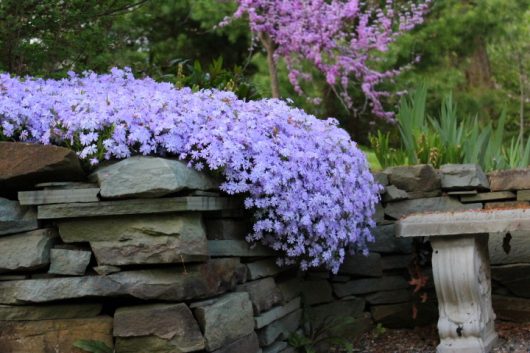 What to Winter-Sow and When | Updated 2021. YOU MIGHT WONDER WHEN, exactly, to winter-sow your perennials, annuals, herbs and veggies outdoors. The easiest answer is “now.” However, depending on where you live, you may find that it pays to plant certain seeds ahead of others. The following schedule has worked well for me:
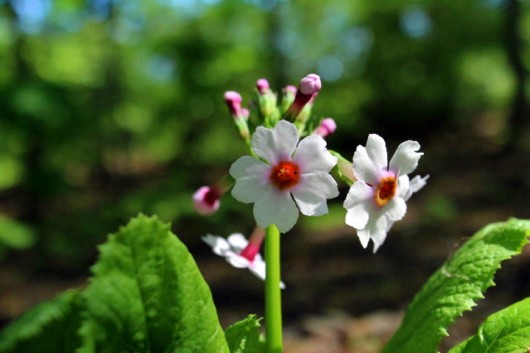 Perennials and Hardy Annuals
As a rule, if a plant is hardy in your zone, you can plant its seed any time in winter, regardless of the temperature outside. Sprouting will occur when warmth arrives, normally in spring. However, the seed can also sprout during some freak warm spell between weeks of frigid conditions. This is not a problem for perennials and hardy annuals. They simply yawn in the face of frost.
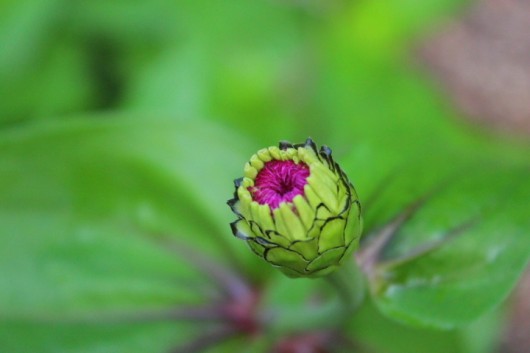 Tender Annuals
You can plant these early, too, with one important caveat: Should sprouting occur during a warm day (and remember, it’s even warmer inside the milk-jug greenhouse), you’ll have to throw a blanket over the container at night because such seedlings are easily killed by frost. That’s why they’re called “tender.” Consequently, to avoid the covering-work, it pays to delay the sowing of tender annuals until March or April.
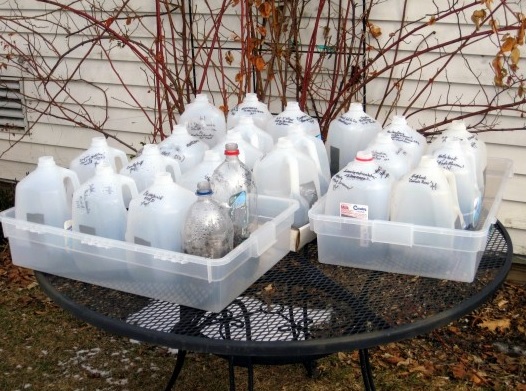
Winter Sowing Schedule
Last year, in my own, zone 5-b garden, I planted perennials, annuals, herbs and vegetables using the following time-table. All of the seeds sprouted and survived (except the Delphiniums, probably because the seeds were old).
 January through February:
Flowering Perennials & Hardy Annuals
Digitalis purpurea (Wild Foxglove)
Oenothera speciosa (Evening Primrose)
Consolida (Larkspur) ‘Galilee Blue Double’
Aquilegia (Columbine) ‘Alpina’ blue
Aquilegia ‘Scarlet’
Aquilegua mixed
Aconitum carmichaelii (Monkshood)
Delphinium grandiflorum ‘Blue Mirror’
Nepeta ‘Pink Dreams’ pink
Oenothera lamarkiana yellow
Alcea (Hollyhock) ‘Camois Rose’ rosy-pink
Alcea ‘Apple Blossom’ pale-pink
Berlandiera ‘Chocolate Flower’ yellow, fragrant
Aquilegia ‘Crimson’
Campanula (Bellflower) ‘Champion Pink’
Campanula latifolia ‘Brantwood’ purple
Nicotiana ‘Fragrant Cloud’ and ‘Purple Perfume’ (I also sowed these indoors, under lights; both grew with equal exuberance)
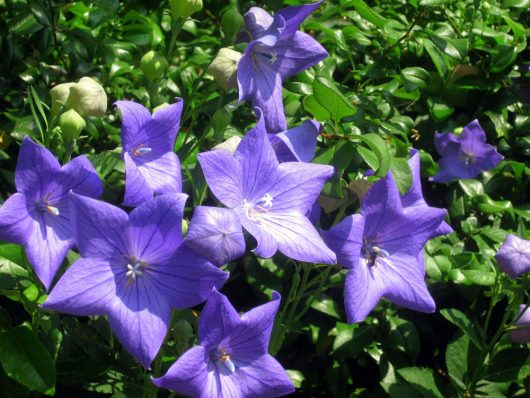
Platycodon (Balloon Flower) ‘Sentimental Blue’ (pictured above)
Lupinus (Lupine), ‘Russell Hybrids Mix’
Centaurea cyanus (Bachelor Buttons) common blue variety
 Vegetables & Herbs
Spinach
Kale
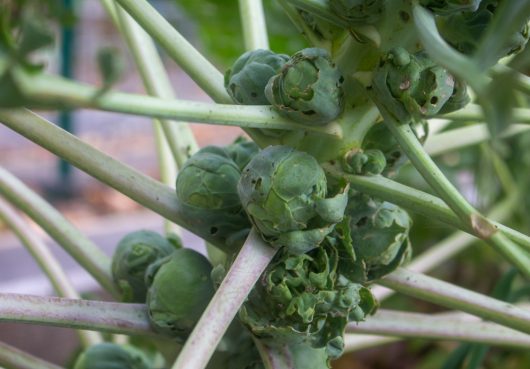
Brussels sprouts
Peas
Broccoli
Thymus serpyllum (Creeping Thyme)
Salvia (common sage)
Oregano
Cilantro
 March
March
Tender Annuals, Vegetables & Herbs
Impatiens wallerana
Cosmos ‘Double Pink Bon-Bon’
Zinnia ‘Violet Queen’
Marigolds
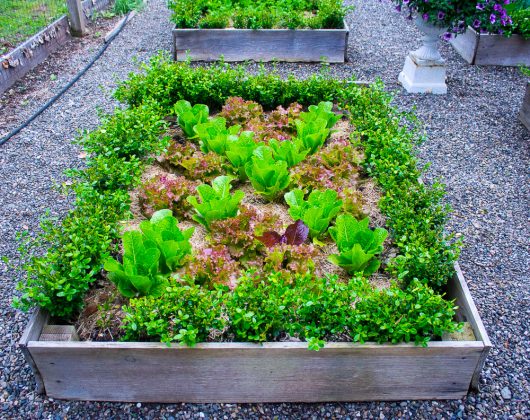
Lettuce (numerous varieties)
Bok Choy
Beets
Carrots
Basil
Parsley
 April
April
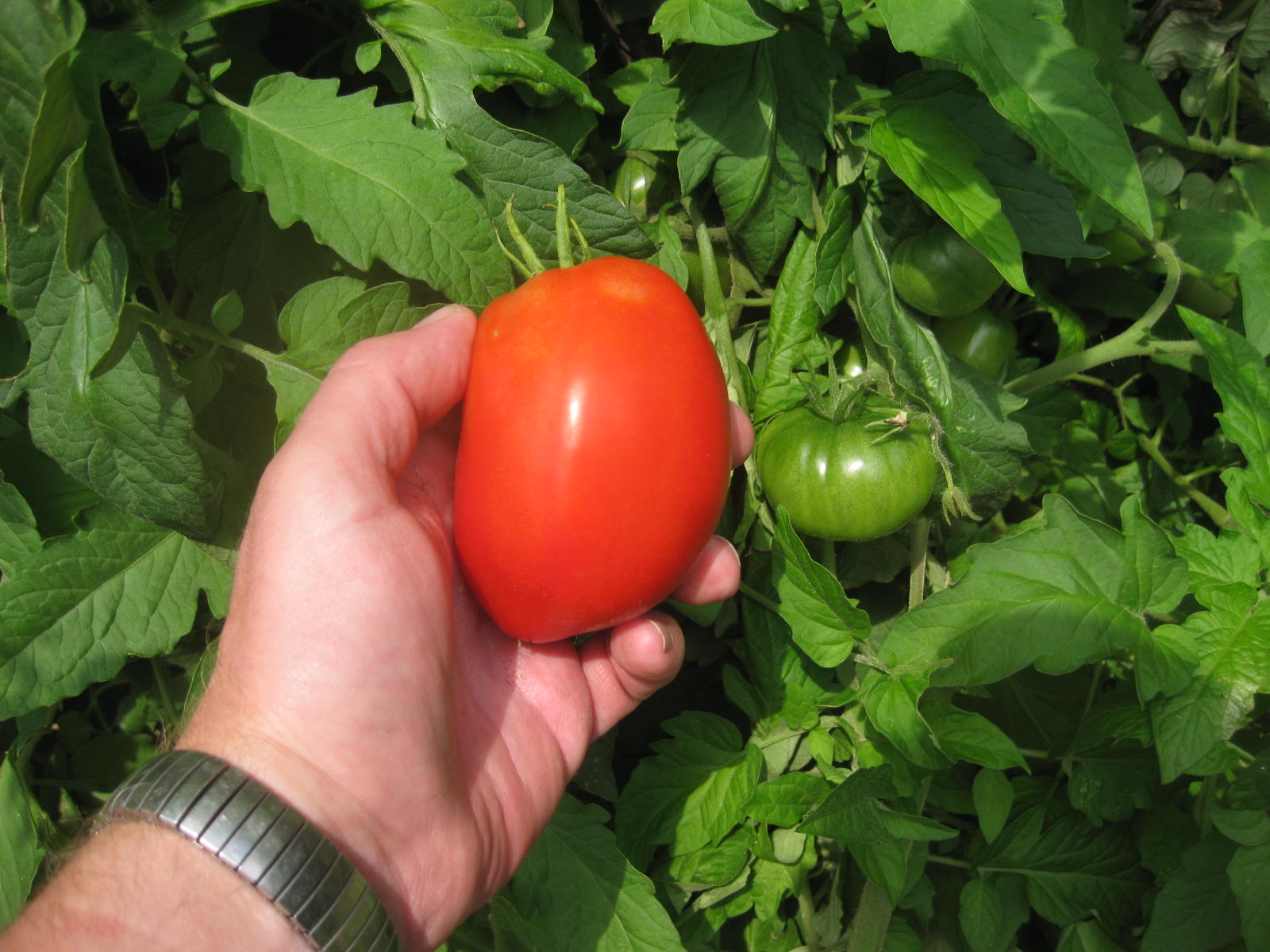
Tomatoes
Again, this planting schedule is based on my own, zone 5-b climate. If you live in a milder zone you can winter-sow your seeds much earlier than me. I know a Texan who winter-sows his tomatoes in December.
And by the way, have you tried my Tomato Pie yet? Here’s the ridiculously-simple recipe.
Well. I hope this post was helpful to you in some small way. It’s fun to plant our gardens at the “wrong” time of the year!
Hungry for more? Get my email updates, and subscribe to my YouTube channel.
Related Posts:
Winter-Sowing 101: The Basics
Fast Food My Way: Chicken with Herbes de Provence
Thyme and Wine Beef Stew (GF)

Yolanda says
Kevin, this might sound like a stupid question, but can you winter sow corn? And if so, when? I'm in zone 6, so a little warmer than you.
Kevin Lee Jacobs says
Yolanda – no such thing as a stupid question around here! In zone 6, I'd wait until late March to plant corn. Choose an “early” variety, such as 'Platinum Lady', 'Quick Silver', or 'Viva.' These will germinate at lower temperatures.
Erin says
Thanks for this great list Kevin! – I was wondering about growing corn this year… How much do you recommened to plant for just 2 people (and friends)? and how much space would I need for this crop?
Kevin Lee Jacobs says
Erin – you're welcome.
Regarding corn…after reading Michael Pollan's “Omnivore's Dilemma,” it seems there are certain Monsanto varieties which can be planted extremely close. Monsanto types are a no-no, however.
I'd winter sow 4 seeds per milk jug. Then plant the seedlings in rows 2 feet apart in the open garden.
Sheila says
Kevin, I'm just wondering: did all of the perennials you planted in jugs last winter bloom during summer?
Andrew says
Did you soak or nick your sweet peas before planting them? I seem to recall you saying somewhere that this isn't necessary with winter sowing.
Kevin Lee Jacobs says
Sheila – Although most perennials bloom the second year after sowing, a few bloomed for me their very first summer. These included Larkspur, Evening Primrose (both pink and yellow), Monkshood, and Nepeta. Of course all of the hardy annuals bloomed…sweet pea and nicotiana my favorites.
Andrew – Yes I did say just that in an earlier post. Neither sweet peas nor morning glories require nicking (or soaking) before winter sowing. The natural freeze-thaw cycles in winter break down their rock-hard shells.
Anonymous says
I learn so much from you. Nicotiana is one of my favorites, too! The variety Alata to be precise. I can't find it in seed or starts. One happy year our supermarket had a garden buyer who wasn't afraid to order material other than the standard grocery store variety. That's where I first met Alata. I've asked my nurseries to order it but it's never in their catalogs. Do you know where I might find this beautiful Nicotiana? It is very tall and lacy, comes in white or pastels and has an intoxicating scent after sundown.
Andrea
Kevin Lee Jacobs says
Andrea – Nicotiana 'Jasmine Alata' and N. 'Fragrant Cloud' (which I grow) are, it appears, one and the same. The plant grows to about 5 feet; the tubular flowers close during the day and open at dusk; the scent is both HEAVENLY and far-reaching.
You can buy the seeds Alata online from Renee's Garden.
Anonymous says
aaah,interesting! I've been passing up Fragrant Cloud in hopes of finding Alata! Thank you VERY much. LOVE THIS BLOG.
Andrea
Rainwater harvesting for gardening success says
Here in the UK this winter we had -17C at 1pm for days plus 2ft of snow. My Purple Sprouting Broccoli looked fine at first, but after 2 weeks of thaw, it hasn’t survived. The thick main stems have gone to mush. This is the first winter that I have lost the crop and I was so looking forward to my first taste.
On the other hand, the Arucola, whose seeds I brought back from a rainwater harvesting trip to Southern Italy, has survived magnificently and is growing back vigorously from the base. The Italians told me that it would never survive in the UK!
Sustainable rainwater harvesting says
Here in the UK this winter we had -17C at 1pm for days plus 2ft of snow. My Purple Sprouting Broccoli looked fine at first, but after 2 weeks of thaw, it hasn’t survived. The thick main stems have gone to mush. This is the first winter that I have lost the crop and I was so looking forward to my first taste.
On the other hand, the Arucola, whose seeds I brought back from a rainwater harvesting trip to Southern Italy, has survived magnificently and is growing back vigorously from the base. The Italians told me that it would never survive in the UK!
Kevin Lee Jacobs says
Welcome, Sustainable rainwater harvesting – Yes, you've had rather severe weather in the UK! Amazing that Arucola (we call it Arugula here) survived such low temps for you. Some salad greens are really very sturdy.
Would you believe it is presently -12F (-24C) here? Thankfully none of my winter-sown seeds have sprouted yet!
Sarah D says
Hi Kevin,
Just discovered your blog last evening when googling how to winter-sow corn. You have some great stuff here. Thanks!!!
I am in zone 6a, just a tad south of you, and I'm wondering how tall my corn seedlings might be 3-4 weeks from now if I sow them in milk jugs and place them outside today. I'm trying to time corn, squash/melon, and beans for a 3 Sisters patch. I think it would be advantageous if I could start the corn so that it's 4-6 inches tall BY last frost date (mid-May here), so I can transplant them then. I'd then immediately direct seed my pole beans and winter squash, as well as my melon seedlings (which I will start inside on May 1). I'm concerned that if I direct seed the corn after the last frost, I'll be losing to much time with my melon and winter squash and they might not mature in time.
Any thoughts? This is my first experience with sweet corn.
Kevin Lee Jacobs says
Sarah D – nice to meet you! I've wanted to try the three-sisters approach to gardening for a long time. Seems you need considerable space to pull it off, however. Here, I grow melons and winter squash vertically.
Corn germinates very quickly when soil temperature is 50 degrees/daytime. Consequently, I think you are better off direct sowing it. Then proceed, as you mentioned, to direct-sow both pole beans and winter squash once the corn achieves 4 inches in height. You are wise to start your melons early indoors, since they demand such a long, hot growing season.
Hope you'll visit here frequently — I'd love to hear how this project works out for you!
Sarah D says
Thanks for your ideas, Kevin. Nice to meet you too! I have a 10' by 22' space for the three sisters scheme. I hear it can be pretty unruly, but I'm intrigued by the whole companion planting idea, so I'm going to jump in and try it. Thanks for helping me bounce this around in my head. Do I have to wait until the “no chance of frost” date to direct seed the corn or can I do that sometime between now and then (say May 1)?
I've winter-sown my tomatoes this year and have many tiny seedlings that are JUST beginning to get a set of true leaves. I'm trying to keep the faith and believe that I will have sturdy plants at some point that will produce plenty of tomatoes. 🙂 I'll be watching the forecast for heavy frosts as you suggested.
Just planted out some lettuce and kale seedlings (also winter-sown) and placed row covers. I'm pretty sure they'll all do well. Also transplanted some tiny onion seedling that I winter-sowed. Have no idea how they will fare. For me, winter-sowing is perfect because my home is too cool to start seedling indoors and the whole light and bottom heat thing just gets terribly complicated.
Anyway, thanks again. 🙂
audrey says
Hi, I live in UK Zone9 and am wondering if outdoor winter sowing in plastic bottles, would work the same here?
Many thanks for your blog, please keep up the good work.
Kevin Lee Jacobs says
Audrey – Nice to “meet” you. Yes, you can absolutely winter-sow where you are. What do you plan to plant?
Barb says
Hi Kevin, I’m wondering about geraniums. I’m in zone 5 and wondering timing to have them survive the cold but be large enough for planting in containers by the end of May.
Kevin Lee Jacobs says
Barb – If you are referring to the large-flowered, zonal geraniums (pelargoniums), you can winter-sow them now. However, they won’t germinate until the soil temperature in your container reaches 70 degrees, and stays there fairly consistently. But the seedlings can handle night time temperatures down to 29F. They are amazingly sturdy plants.
Another thing. Try to sow your zonal geranium seeds thinly, meaning not more than 9 seeds per gallon-size container. This will give the young plants room to grow.
Stacey Kenkeremath says
I love your site!! Can’t wait to start the winter sowing- got my gallon jugs all ready!
You asked for a Wassail recipe. Here’s one I like:
14 very small (Lady) apples
3 12-oz bottles of good non-alcoholic beer ( I like Bitburger alcohol free, or Erdinger Alkoholfrei. I get mine at a German specialty store.)
1/2 c firmly packed brown sugar
2 3-inch pieces stick cinnamon
1 tsp whole cloves
1/2 tsp ground ginger
3-4 whole allspice berries
1 4-inch strip of orange zest (no white membrane)
2 c apple cider
Bake the apples in a shallow pan at 375 degrees until tender, about 20 minutes. You need not core them or peel them.
Heat 1 bottle of beer in a large saucepan with the sugar, the spices, and the orange zest and simmer for 10 minutes.
Add the remaining bottles of beer and cider gradually.
Bring to a boil, then lower the heat and simmer for 5 minutes.
Put half of the baked apples in a large punchbowl and pour the wassail over them.
Use the rest for a floating garnish on top.
Drink warm.
If you want a “grown-up” version, use ale in place of the NA beer and sherry in place of the cider.
Please let me know what you think!
Kevin Lee Jacobs says
Stacey – Glad you like this place, and glad you sent in this Wassail recipe. I’ll copy this into my recipe folder, and will surely make it next December, when the carolers come a-wassailing!
Have fun winter-sowing…I’ve just now planted 6 jugs, but have many, many more to do. What fun!
Jenny says
I’m so excited about winter-sowing! I’m looking into perennials that require full to partial shade, does this matter with the winter-sowing? I didn’t check everything on your list, but it seemed that most of the plants were “sun” plants. Thank you!
ArtistryFarm says
PERFECT! Your advice is always perfect…
Kevin Lee Jacobs says
Jenny – So glad to hear that you are winter-sowing! Even if your perennials (or annuals) will ultimately require partial to full shade, you still winter-sow them in the usual manner: in full sun. Sunlight in winter and early spring is too weak to have any negative effect on the emerging seedlings.
ArtistryFarm – Well, if not perfect, then timely!
badger gardener says
I made my mini-greenhouses tonight. I don’t have a gas stove for heating up the screwdriver to make the drainage holes, but I found a candle flame worked fine. This was so easy! I even let my boys poke some of the holes (w/ close supervision, of course) which they enjoyed immensely. We are going to start some seeds tomorrow. I usually soak my parsley seeds, but am thinking I can skip that step after reading your explanation of the freeze-thaw cycle. This is so exciting!!!! True gardening in Winter!
badger gardener says
I just caught that parsley is listed on the March schedule.
Kelli Patton says
Very helpful list! I have taken more of a free spirit approach and sowed with abandon this year – reserving only the tenderest of plants for later planting. At my house, you have to be tough to survive! I read the comments about corn with interest, because I plan to grow some ornamental corn this year – mostly for decorating in fall. My husband has absolutely forbidden me to buy foddershocks! (Apparently, he had to vacuum his vehicle for hours after the last time I brought some home….wasn’t that clever of me to use his vehicle?)
Kevin Lee Jacobs says
badger gardener – Drainage-hole-melting — what a fun way to get your kids involved in gardening! Fun, too, could be an experiment with parsley seeds: sow some in January, sans soaking, and others in March, pre-soaked. Then you can report your findings!
Kelli – You are a winter-sower after my own heart.
Sharon says
Wow, thanks, Kevin,
I live in the Pacific Northwest and we just got clobbered! Once we crawl out of the remaining tree limbs, power lines from my house to the road, etc., cant wait to get restarted with the ws you inspired me to give a try. after the last 3 days w/o any power we have just begun to feel the heat and electrics again this morning! (&email and cable). what a winter blast for us wimpy washingtonians. Cant wait to get going with your suggestions as well as try some tubs of fava beans and pea tips for salads. Let me thank you again, love your resourcefulness and generous sharing of knowledge and experience as well as ability to dumb it down to my level. Your the best! I will spread the word to my limited number of garden geek friends who will also appreciate your simple communication style!
Anne says
I’ve been drinking milk all winter to have my gallon containers ready for seeding. As I live a town away from Kevin, it’s wonderful to be in the same zone and ready to follow his instructions. Corn flowers or Bachelor Buttons are a favorite and I’ve had overwhelming good luck getting an early start in my garden with these fabulous blooms. I’m ready to start my garden in this Year of the Dragon. Thank you, Kevin
Deborah Phlippi says
Today I am going to start winter sewing. Have a 3 dozen cleaned out containers to start with, and am excited to read that this is something you can do throughout the winter depending on the type of seed.
I’ve picked up 30 packets of seeds – way too many, I know, but I’m also planning on gifting some. Most packets have way more seeds than I anticipate using – any suggestions?
I purchased soil that is especially prepared for starting seeds – is this the proper kind or would regular potting soil be better?
I appreciate your informative newsletter and the helpful responses from your readers. So exciting!
Kevin Lee Jacobs says
Sharon – Yes, your region really got clobbered last week! Glad to hear that your power and heat have both been restored. And thank you for your kind works. I can’t tell you how much I appreciate you sharing this site with your garden-geek friends. I think gardeners — and people who feed birds — are the best people on earth.
Incidentally, I’m a native Washingtonian. Born at Sacred Heart Hospital in Spokane.
Anne – Well, that explains why, when I visited our local supermarket last Wednesday, there were no gallon-size milk jugs to be had!
Deborah – Three dozen jugs — good for you! Honestly, we who winter-sow usually end up with waaaay more plants than we can possibly use in our own gardens. Good idea to gift some of your surplus — I do that, too.
You asked about soil. When winter-sowing, use any mixture which is well-draining. It need not be sterile, since we are planting outdoors, not in. Over the years I’ve tested seed-starting mix, all-purpose potting mix, African-violet mix, and my own compost, amended with perlite. All these worked admirably for winter-sowing.
Donna B. says
I… I should just print out this page. It would be easier to recall it that way – heehee!
I am ready to do my winter sowing tonight… I have six milk jugs cleaned and ready! I even took a step forward and picked up some vermiculite! I’m going to make a mixture of vermiculite, coconut coir, leftover “seed starting mix”, and garden soil for my containers… I hope that’ll work great!
Sadly I’m not like Deborah up there, goodness! What I could do with that many to start seeds! Is it possible to make quadrants in the containers? Pair up seedlings with similar requirements and make the most of my limited space?
Kevin Lee Jacobs says
Donna – Six jugs is a great start! I wouldn’t divide different seeds into one container. What looks like a lot of room to you now will not appear so when the seedlings emerge.
Although I happen to prefer gallon-size jugs for winter-sowing, in the past I have also used soda-pop bottles made of clear plastic. As with jugs, punch out plentiful drainage holes in these, too, and cut the center to permit a hinged top. Be sure to remove the lid! Such bottles are great for sowing small quantities of seeds.
badger gardener says
I put out my little greenhouses yesterday and they are already being exposed to freeze-thaw. Started in the teens, then came freezing fog (I didn’t know that was possible) and now we are in the 40’s, with temps. dropping later and rain turning to snow. My kids enjoyed this so much that I am going ot talk to the teachers about doing this project at school. We installed a school garden last year (I say “we” liberally because my friend and fellow parent did all the planning and grant-writing, I just provided some labor) and w/ the $ we did purchase a few grow lights. However not nearly enough for all of the classrooms. I don’t know how the teacher will feel about first graders and hot screwdrivers but am hoping if we get some more volunteers for supervising, she’ll let them do that part too.
Kevin Lee Jacobs says
badger gardener – Yes! Seems like you’re having a good influence on a number of kids lives. I hope the school sees the value in all this. Winter-sowing (and growing plants in general) is a biology lesson in itself. Not to mention it’s hands-on…and consequently FUN.
Aimee says
Thanks, Kevin – this is so helpful and informative! I’m in zone 7a here in Brooklyn, NY. I have more seeds than containers right now, but a friend just took me on a “tour” of her apartment building’s recycling room where I scored many gallon milk jugs and other suitable plastic containers – ha!
Now I’ve just got to get a planting medium. I’ve read that some people use seed-starting mix, others use a potting mix like ProMix, and others mix these two together. Some folks even used their own soil / compost blend and baked it in the oven or poured boiling water over to kill weed seeds and soil-borne nasties! That sounds like a bit too much work for me…I’d rather go the sterilized mix route. Do you have a blend you like to use for winter sowing?
Kevin Lee Jacobs says
Aimee — congratulations on your big recycling score!
Concerning soil: You can use a sterilized mix if you want to you, but this certainly isn’t necessary. After all, the jugs are being placed outdoors where there is little danger of “damping off.” Damping-off is a fungus that typically strikes seedlings which are grown in non-sterile soil…indoors.
Over the years I’ve tested all kinds of mixtures for winter-sowing projects — seed-starting mix, all-purpose peat/perlite potting mix, potting mix with “moisture crystals,” African violet mix, and my own compost, amended with perlite. All of them worked perfectly well.
The only winter-sowing-soil requirement is that the mix be very well draining. And all commercial mixtures — which are usually composed of peat & perlite — fit this drainage-requirement admirably. Just make sure you punch out lots and lots of drainage holes in your containers. And have FUN!
Carlie says
How many holes do you generally “drill” in a milk jug?
Kevin Lee Jacobs says
Carlie – I drill (or rather, melt!) 12 holes in the bottom (3 in each quadrant), and then 2-3 holes along each side, about a half-inch up from the bottom. You can see close-up shots of both the bottom and side drainage holes in this post.
And here are more details for turning a milk jug into a greenhouse.
Let me know if any other questions arise — I’m happy to help.
Denise says
This idea intrigues me and I’m going to try it. I think I live in the same general region as you, I’m in the northern Dutchess county area, right on the border of zones 6-5A. One question, you mention sowing beets and carrots…do you find you have any trouble with the root vegetables when you transplant them? I’ve always heard that carrot seedlings don’t tolerate being transplanted well, that it leads to root deformities.
Sharon says
Hello, Kevin. What type of soil should I use in my gallon jugs? Zone 5, Alabama.
Kevin Lee Jacobs says
Denise – I’m a wee bit north of you, but I’ll still say “Howdy, neighbor!”
Surprisingly, carrots can be transplanted early on without worry of root deformity. I know that some winter-sowers will plant the seeds in a cell pack (one seed per cell), and then place the pack inside a jug. This way the young carrots can be transplanted with minimal root-disturbance. I’ve found that unshapely carrots are more often the result of rocks in the garden bed, or compacted soil.
Ditto for beets. Although beets sprout so readily in zones 5 and 6 that I doubt one gains anything by winter-sowing the seeds.
Sharon – Over the years I’ve tested all kinds of mixtures for winter-sowing projects, including seed-starting mix, all-purpose peat/perlite potting mix, potting mix with “moisture crystals,” African violet mix, and my own compost, amended with perlite. I can tell you that all of these worked perfectly well.
The only winter-sowing-soil requirement is that the mix be very well draining. And all commercial mixtures — which are usually composed of peat & perlite — fit this drainage-requirement admirably. Just make sure you punch out lots and lots of drainage holes in your containers!
Denise says
Howdy, Neighbor! 🙂
I was indeed thinking that it probably wasn’t worth sowing the beets this way, but I am very intrigued with your winter sowing ideas in general and spent the day checking out which containers I have that would be good for this project. I like that idea of planting one carrot seed per cell… I tend to hate weeding out the carrot seedlings. So this is something I’m definitely going to try, too.
Between your column and the new Fedco seed catalog, I’m itching to get gardening! 🙂
Denise
Kevin Lee Jacobs says
Denise – Agreed — thinning out thickly-sown carrot seedlings in the open garden is a royal pain! All that bending…and all those wasted seeds!
With a cell-pack, even if you sow 3 seeds per cell, it’s easy enough to pinch off (and thus kill) all but the strongest seedling.
Itching to get gardening here, too. Thank heavens for winter-sowing!
Franklin Community Gardens says
Hi,
Just wanted to say thank you for the winter sowing information! I shared your link on our garden blog, hoping to get our gardeners growing this weekend. Great information, thanks! -Amy
Kevin Lee Jacobs says
Amy – You’re welcome. Have fun!
Michelle Ann Anderson says
Quick question about winter sowing, Kevin. Just how many seeds is it reasonable to put into 1 jug? I started some artichokes last week and only put 2 seeds per jug. But, I’m wondering if I’m being too conservative?
Thanks so much for your tips. We’re really looking forward to our garden this year!
Kevin Lee Jacobs says
Michelle Ann Anderson – Nice to meet you. With large seeds (spinach, broccoli, etc.), I usually plant six to nine per gallon-size jug.
I try to sow tiny, dust-like seeds (nicotiana, thyme, etc.) as thinly as I can. Which isn’t in fact very thinly at all!
But winter-sown seedlings are incredibly strong. If you have to slice them up like brownies at transplanting time, so be it. They will recover from the ordeal very rapidly.
Ruth says
Just found your site. Can I still winter sow something? or is it too late? I’m in Zone 7.
Kevin Lee Jacobs says
Ruth – Nice to meet you.
In your zone at this time, you can still winter-sow. The only problem you might run into is with seeds which require cold-stratification in order to germinate. All other seeds should sprout without a hitch. Have fun!
Deb Nelson says
How awesome is this blog!!?? I am so happy to have found it. I will definitely be experimenting with it this year, in the next couple of weeks. I too am in zone 7 and most of my planting will be veggies and herbs which should work out nicely. I am so excited!! Now I have to go scavenging to get my supplies. The biggest challenge will be keeping Badger the Cattle dog from destroying all my work!!
Deb Nelson says
Oh, one more question, how about tomatoes? Have you tried this technique with them and how did that turn out? Thanks so much!
Shawnee says
Kevin, what if you winter sow something like spinach or lettuce and it gets too big before your garden is ready for transplants (like still frozen in April?) I guess i could cover my bed with a black tarp and thaw it out faster. Anyway, your don’t write much about transplanting your winter-sown plants. I would be interested to hear if you have any tricks up your sleeve. Shawnee
Kevin Lee Jacobs says
Deb – Sorry for the delayed response. The website was down for several days!
You have Badger the Cattle dog, while I have Lily the Beagle. To keep Lily from knocking over my winter-sowing vehicles, I set them on a table. You may have to do the same.
About tomatoes. Because these will gladly reseed themselves, they are great candidates for winter-sowing. I’ve sown them in January, and also in late-March. In both cases germination occurred in late April, and the seedlings were ready for transplanting in late May. (Much to my surprise, the seedlings even survived a number of freezing nights. I guess the milk-jugs provided them with just the right amount of protection).
Shawnee – Spinach and lettuce won’t germinate until the soil temp is about 65 degrees. Consequently your plants won’t get terribly large before they are due for transplanting. Keep in mind that winter-sowing is very different form seed-starting indoors (where plants can indeed get too large too soon).
And here are some tips for transplanting…
heather says
Hi Kevin,
I love your site!! Im very excited to get planting!!
I am new to gardening and Im not sure which zone I am in but I live in Saskatchewan Canada. I was wondering if it is possible to winter-sow here? A normal year the temperatures get quite cold but this year is like no other, very mild. I want to plant a vegetable garden with dill, a few herbs and the regular vegetables you’d buy in the grocery store. (carrots, lettuce, peas, cucumbers for pickling, radishes, green and yellow beans and tomatoes) Please help!
Constance says
Kevin, I am new to the whole gardening thing….I live in an apartment with two balcony’s (zone 9b)I have already started several things in containers. I was wondering about the milk jugs you mentioned…what do you do with those?
So glad I found your site!
Deb Nelson says
Thanks, I noticed a problem with the website so no worries!! I planted my winter sow on Thursday. I planted Kale, Collards, Spinach, Chard, Chives, Parsley, Cilantro, Basil, and 2 kinds of peas. I have to share some extra techniques I tried. I work in a Veterinary clinic and we have these trays that our blood tubes come in that are nicely sectioned cardboard. I used one of these in the water jug (fit very nicely) to plant my basil. Now when the seedlings are ready to transplant, they should just slip out of the sections easily. Will report back when transplant occurs. Also, I went to the local hardware store and bought a large black plastic “mortar mixing tub” for about $6. I drilled holes in the bottom for drainage, they will hold at least 9 jugs. I also went to a local store and bought a couple of sterite plastic containers with snap on lids. I drilled these also for drainage and planted something in them. Will report how well they do. I hope to be able to use them for a few years. I will still use the recycled jugs too but thought I would give this a try. I will be planting my tomatoes in a few days. I am really looking forward to this gardening season. Thanks so much
Jen says
Hi Kevin – I love this site and how generous you are with your information. How about echinacia (coneflowers) – have you tried winter sowing them? I am in zone 4…is it too late for winter sowing? Thank you!
Kevin Lee Jacobs says
Heather — You absolutely can winter-sow in Saskatchewan ( I visited your city at the age 19, when I was the lead singer of a rock band!). From the list of veggies you posted, you should winter-sow your lettuce and peas now, in March. Sow the others about 8 weeks before you’d normally transplant them to the open garden. Plant your radishes and beans directly in the open garden — these sprout so quickly you probably won’t gain anything by winter-sowing them.
Constance – Nice to meet you. Here’s what the milk-jugs are all about.
Deb Nelson — Would love to hear how the cardboard separators work out for you. The mortar-mixing tray seems a good idea. I use the sterlite boxes (drilled) to hold my milk jugs, too. These have lasted for several years now. Winter-sowing’s addictive, yes?
Jen – Welcome. I have not winter-sown coneflowers, but I know hundreds of other gardeners who have, and successfully, too. My advice is to sow them now ASAP. I think they require freezes and thaws (stratification) in order to germinate. Otherwise, it’s certainly not too late to winter-sow in your zone. Have fun!
Jenn S says
Hi Kevin! A friend pointed me towards your site. I’ve been itching to get gardening this spring, and I love the idea of starting early with winter (or spring) sowing. I’m near Seattle in zone 8b, and most of my perennials are coming up already, with the first daffodils and winter aconite blooming. My (ambitious) list of veggies to try this year is: carrots, radishes, tomatoes, zucchini, patty pan squash, delicata squash, sweet and hot peppers, spinach, lettuce, okra, green and scarlet runner beans, sugar snap peas, cucumbers, Swiss chard, mustard, and kale. I’ve already got onions and garlic in the ground. From reading your website, I am thinking the best candidates for sowing in jugs are the tomatoes, lettuce and other greens, peppers, cucumbers, okra, peas, and carrots. Is this correct? Does squash do well with winter sowing? I’ve also got some basil, sage and creeping thyme for the jugs. Have you ever tried sunflowers?
Thank you for all the information your posted on your website! Your gardens are lovely. I’m hoping that with your advice, mine can someday be as nice. I appreciate your posts on seed sources as well. I bought most of my seeds from D. Landreth this year, although their catalog is rather dangerous. There are also sellers on Amazon.com that carry organic seeds. Those are also dangerous, as to “save on shipping” I now have trellis netting, preying mantis egg cases, legume inoculant, plant tags, etc… I’m just wishing I could buy the jugs, as those are the most difficult thing for me to get and I’m off to a late start. I’m thinking of starting a chocolate milk addiction.
Kevin Lee Jacobs says
Jenn – Nice to meet you. Rather than starting a chocolate milk addiction, you might try a cheese-making addiction! That’s how I acquired most of my milk jugs.
About squash. While you can certainly winter-sow this if you wish, all squash seeds sprout so quickly in the open garden (once the soil has warmed) that you really won’t gain anything from an early sowing in a milk jug.
The other seeds you mentioned — including creeping thyme — are all great subjects for winter-sowing. While I have not attempted sunflowers with this method, plenty of other gardeners have had success with the plant.
Now about those preying mantis egg cases…sounds like a “must-have” to me!
Ian says
So far, of the perennials and veggies winter sown in Feb (zone 5), Tuscan kale, broccoli raab, and bachelor buttons are poking up! Still waiting for redhot poker, shasta daisy, artichoke, leeks, delphiniums, nasturtiums, creeping thyme, and nigella. Getting ready to winter/early spring sow cosmos and pinwheel zinnias this weekend. Thanks for all the tips!
Kevin Lee Jacobs says
Ian – So glad to hear that your winter-sowing efforts are already paying off. Kudos to you!
Abe Yonder says
You want gallon jugs? Try dumpster diving at school cafeterias and other places that throw them away every day; also those little individual waxed milk cartons thrown away by the hundreds make good starter containers.
Kevin Lee Jacobs says
Abe – Nice to meet you. Excellent tip!
Deb Nelson says
Update on my “first ever forever winter sow project”, checked my containers today (well I have checked them more than that) but I am pleased to announce that I have snow and snap peas, dwarf Kale, Georgia Southern Collards and Rainbow Chard sprouting quite nicely! I only planted them on the 1st. I expect the other veggies to follow suite real soon as the weather has been quite nice here in zone 7 (Western North Carolina). I planted some sunflowers on Thursday (3/8) so we will see how they do. I plan to plant some tomatoes next week.
I also have in mind a plan for a cold frame using recycled materials. I will share that with everyone whenever I get it constructed and see if it is something worth sharing.
I am with Jenn, my list of “wants” keeps getting larger and larger, I don’t know how I will have room to plant all of them!! I do a lot of container gardening and I am experimenting this year with some other items I recycled from work. Those nice little Styrofoam cooler things that cold pack stuff gets shipped in (and usually sent to the land fill) should come in handy for containers and should hold up well, this is if I can keep “Badger the Cattle Dog” from chewing them up, he already got 2 of them. He also made it know to me that I am going to have to put up a higher fence into the garden area as he apparently jumped the fence to get to the “coolers” and had a grand ole time of destroying them! Silly little brat!.
I have always loved gardening but this website has made me more excited than I have ever been to grow some stuff! I’m sorry to keep going on and on but I get that way when I am truly enjoying something useful. Thanks so much for your website Kevin, you are now my new favorite!
Candi says
Kevin- I live in North Pole, AK (seriously, I do) So, would this work for me? I’d love to start my garden stuff now but there is 4 feet of snow on the ground and the nights are still dropping into the NEG 20’s. Thanks for any tips you can give me!
Kevin Lee Jacobs says
Deb Nelson – Congratulations on your winter-sowing success! I jumped for joy this weekend, too, when I discovered my romaine lettuce, tarragon and blue flax had all sprouted. Your dog sounds like a handful — and a lot of fun!
Candi – Welcome. Yes, you can winter-sow even in North Pole, AK! Start by planting your perennials now. Hold off on tender annuals and veggies until about 8 weeks before you’d normally be able to transplant them to the open garden. And have fun!
Kathy says
Kevin, I have 18 milk jugs with flowers and vegetables on my bench outside. Thanks so much for the inspiration. I love this idea and there is no waste in this process. I can recycle the milk jug. But, that is not why I’m writing. I just attended a gardening workshop yesterday and found out that Northwest Ohio is now a zone 6, and I didn’t even have to move. Oh. the possibilities…
heather says
Hi Kevin, thanks for the advice about winter sowing for my vegetable garden in Saskatchewan! When would be a good time to winter sow spinach? I presume it would be like lettuce and sow it now? I have a section of flower bed that is in complete shade with a short period of evening sun (about 1hr) a day. I would love some color there that will come back each year. it is about 9ft x 5ft. along side our back patio. Any suggestions? also I have along the front of my house 20ft x 3ft approx that has full sun all day long. Which flowers should i plant that are full vibrant colorful flowers that preferably come back each year that could withstand the +30C to +45C dry heat that we have?
Kevin Lee Jacobs says
Kathy – And consider this — the new hardiness zone is very conservative. You might have palm trees in your future!
heather – Yes – winter-sow spinach and other lettuce greens now. As for flowers for the two areas you mentioned, you might start here: https://www.agardenforthehouse.com/category/gardening/perennials/
Kelly Custer says
Hi, loving your site. I was very interested in your winter sowing timetable, as I have been playing guesswork with more tender seed like basil and stevia (which can take a lot more cold both before and after sprouting than I would have thought). I did want to mention that I see no reason to wait to winter sow tomatoes until spring; after all, in the garden they do reseed by themselves (some more than others, of course). This is my fourth year winter sowing in Iowa, zone 5a. I sow as soon as January; they always come up in April*, go into the ground earlier than the indoor-started tomatoes, and quickly catch up in size–no need to start them indoors, anymore. *Except this crazy hot year, I am getting sprouts already in March!
Kelly Custer says
Oh, Heather, some flowers that would work in shade: some lamiums have pink flowers all summer long, and variegated leaves; anise hyssop reseeds readily and takes full shade for me, and it is a wonderful edible leaf to shred into salads, and sprinkle a few flowers for a surprising licorice taste, and pollinators love it, too; readily reseeding shiso/perilla doesn’t bloom but comes in a purple leaf form that can add some color, and also makes an herbal addition to salads; garlic chives can be a bit of a nuisance as they spread and have more tenacious roots, but they are a good culinary plant that blooms in white for a few weeks, when they are also much loved by pollinators; black eyed Susans are reliable, all summer/fall bloomers for me in deep shade.
Dave sutarik says
Hi Kevin. We have wintersown our perrenials and annuals , and they are all doing well. We will be going out of town next week and were worried about leaving our precious seedlings. The temps next week will be in the 60s. Do you think that it would be good to water well before we leave and keep the milk jugs sealed shut for the week,or will they need to be opened up to get some sun. Thanks much. Dave
Kevin Lee Jacobs says
Dave – Yes to your two ideas, but let me offer a third: move the containers to a position which does not receive direct sun. Otherwise, too much heat can build up in the containers, causing rapid evaporation to occur.
Enjoy your trip. Hopefully it will rain while you are away.
Judy Pennington says
I surely wish I had seen this article earlier. I bought the notso expensive but futile seedling flats, the soil, and lots of seeds. I babied them in my spare bedroom where they got lots of morning sun, watered them when they were dry. Went to check on them the other day because we had been having such warm weather, I thought I would set some out. Much to my dismay, in less than 48 hours, many of my little baby seedling had bit the dust. There was this strange BLUE looking stuff on the top of the soil in all the ones that were dying. Apparently some kind of mold, but I’ve never seen it that color before. So I had no choice, I had to take them outside, remove the dirt and plant them in my outside containers. I wasn’t really ready yet, and may need to go out tonight and cover them, as we are now having a very COOL spell. Wouldn’t you just know it!!! ??? LOL I will use the winter sow next year for sure. I had lots of seedlings and they were tall, but very spindly and week looking. Some of them already look better for being outside in the fresh brisk air.But will have to replant some, especially my herbs. The cilantro and basil didn’t survive, but the oregano looks good, I transplanted Pepper plants, (3 kinds) (the eggplant bite the dust) Okra, tomatillo’s, and my lettuce is doing great. Planted several different kinds of tomatoes, and yes they should be marked well, I just put slips of paper beside the cups each thing was in and will all the moisture and mold, they are illegible. LOL I had been saving milk jugs anyway to use for watering my container garden, so I can use them this winter to plant in too. Thanks Kevin for all your wonderful ideas.
Southern Gal says
just found this great idea – do you think its too late to start some annuals now (i live near tarrytown, ny)
Carole says
I was wondering if there is an alternative to the plastic milk jugs for winter sowing. My son tells me that the plastic containers will contaminate the seeds with chemicals.
I am going to try winter sowing my flowers this year, but for veggies, I was thinking of clay pots and covering with plastic. Would this work? Or is this just paranoia?
Kevin Lee Jacobs says
Carole – I hate plastic, too. But I don’t hesitate to use milk jugs for winter-sowing. The seeds are being set out in winter, when the sun is too weak to heat the plastic in any detrimental way. Keep in mind that at least 99% of commercial growers use plastic for seed starting in greenhouses. And lots of home-gardeners grow tomatoes in big plastic pots.
That said, you could use clay pots. Set them in something which will permit drainage (a milk crate would work) and cover with an old window screen. Remember that the soil in the pots must be exposed to all the winter elements — rain, sleet, snow, and ice.
Michelle Anderson says
Hello Kevin,
We tried out your winter sowing for the first time this year with much success. Thank you for the great tip!
Always thinking, I’m wondering about winter sewing directly in raised beds. Then, cover with mulch for winter and perhaps use a hoop house closer to spring.
To overcome the frozen soil issue, perhaps mounding a layer of loose planting soil on top to sow the seeds in would work.
Is there a reason I’m missing that would make this not be a good idea?
Thank you!
Michelle in ID
Kevin Lee Jacobs says
Hi Michelle – You can winter-sow directly in a raised bed or even in the open garden. No need to keep the soil from freezing if you are sowing perennials or hardy annuals. The only risks are these: seeds can be washed away by heavy rain, or they can be eaten by birds or critters. Sowing seeds in milk jugs mitigates such risks.
Lee says
So, if I live in zone 6, I would start my seeds a month later?
Lee says
Kevin, couldn’t Michelle in ID sow and cover them with hoops? That should cut down on the wind etc.
Kevin Lee Jacobs says
Hi Lee – If you are referring to perennials, you can winter-sow them just as I do, in December, Jan, or Feb.
Yes, Michelle in ID could arrange a hoop-house over her raised. But sowing in milk jugs is so much easier!
Stone6 says
Has anyone had success winter-sowing in YELLOW milk jugs?
Kevin Lee Jacobs says
Stone6 – Can light penetrate your yellow milk jug? To make sure, do this simple test:
Stick your finger or a pencil through the open top. If you can see the object through the tinted plastic, probably the jug will admit enough light for seed germination.
Hope you’ll report your finding.
Aries says
Hi Kevin,
I am in zone 9b Sacramento. Would you recommend winter sowing for my zone.
Robert says
Kevin,
I live in Sealy, Texas. When would be a good time to start winter sowing. I already start my tomatoes in December. It’s a Christmas tradition now. But I would like to get a head start on Herbs and some Perennials. Thanks.
Sandi says
Hi Kevin,
Have you ever tried this method on site where the plant will be permanent to avoid transplanting? (Planting the seed in starter on site and cutting the entire bottom off the jug to cover.) If so, what were your results? Thanks much! (Zone 6 WV)
Mary Ellen says
Kevin, what about lupines? I have lupine seeds and I wondered if I can put them ionto the coldish November soil, or should I winter-sow them in a month? Do I soak or nick the seeds? I have had zero luck with getting plants to survive more than one growing season. Thanks.
Kevin Lee Jacobs says
Hi Mary Ellen – I have oodles and oodles of lupines, all of them achieved through my winter-sowing efforts. Here in zone 5-b, I plant the seeds in milk or water jugs in December/January. Neither nicking nor soaking of seeds is necessary. Be sure to read my Lupin Growing Guide.
donna says
I live in zone 6b when can I winter plant? You have good info.
Kevin Lee Jacobs says
donna – I start my perennials on December 21. But you can winter-sow any time in winter!
Diane Kratz says
?? I need to get some seeds for flowers to winter sow? Any recommendations as to where I should get them? (websites?) I could only get vegetable seeds from the local Agway this time of year.
Kevin Lee Jacobs says
Diane – Here are four seed dealers that I regularly order from (they will ship seeds immediately): Renee’s Garden, Seeds of Change, Seed Savers Exchange and Baker Creek Heirloom Seeds. I plan to order primula seeds from Thompson & Morgan next week. A quick google search will give you website addresses. Happy ordering!
wolfgang says
Great gardening tip!!!!! The vegetable catalogs started arriving about two weeks ago and my order blanks are full. Another fun activity to do during this snowy winter in Wisconsin.
wolfgang says
Greetings again,
I noticed in the hardy seeds you list spinach and peas, plants not known to transplant well. do your seedlings make the conversion to the big plot well?
Kevin Lee Jacobs says
Hi Wolfgang – Speaking from my own experience, yes, winter-sown spinach and peas transplant perfectly well.
Lori says
Wow. What a great idea. With the change in the hardiness zones, it looks like I’m in your zone so that should be easy enough. But I do have a question.
I have become enamored with gourds. Big or little, useful or ornamental…I love them. Last year I tried to grow luffas for the first time. I tried starting them early inside and they didn’t come up. I tried starting them in the garden a little later and they took 2 months to sprout. At the end of our extended summer season, I wound up with HUGE plants and only a few gourds. I have never had this problem before! Have you tried starting gourds with this method? I assumed that because they are related to squash and cucumbers, direct sowing would be the best route but I may be missing something important (obviously). Others have told me that luffas are marginal for my area and they can be finicky. Another friend at work has them practically all over her garden. Any ideas?
Kevin Lee Jacobs says
Hi Lori – I might give luffa a try this summer, too. Unfortunately it is not a good candidate for winter-sowing. Like all squash (gourds included), it is a heat-lover. Best to direct-sow when the soil reaches about 70 degrees. Luffa needs 150 days to mature — so pray and pray for a long, hot autumn!
Amanda says
Deb Nelson- Where in WNC are you from? and what other successes have you had in the area?
Lynn says
Hi Kevin, i would love to see a pic of how you grow your melons and squash. I will snoop around here in your site, maybe I can find a pic. I have very limited yard space here in the South Okanagan of British Columbia, Canada. zone 7b. Its very deserty here, very hot and dry in summer. My little property is srrounded by chainlink fencing and I`m hoping to grow lots of sugar baby watermelons, gourds and squash on the fences. If I can stop the birds from pecking holes in them 🙁 Do you think these 48″ fences are high enough to grow these ? I`m off to Palm Springs California on Wed. Would love to bring back some cacti, but I`m sure it is not permited.
Kevin Lee Jacobs says
Hi Lynn – Although I can’t remember where they are located on this site, I do have pictures (somewhere!) of winter squash growing along the 4-foot tall, wire-mesh fence that surrounds my kitchen garden. So yes, you can grow baby watermelons, gourds and squash on a chain link fence. Just train the vines, as I did, to climb horizontally as well as vertically. And be sure to space them about 6 feet apart. They are exuberant growers!
Susi says
Kevin, I love those Shock Wave petunias! However I don’t see petunia on your winter sowing lists, so I’m wondering if you don’t use them. Also, I tried a POtunia last year– from a garden center, sold individually–and its performance was great. A lovely color named Papaya. It’s not a tall variety, but it flowers its head off. I would like to try it.
Ursula says
Hi Kevin.
I live in zone 4b…I have a hoop house and was wondering if I could try sowing directly in the raised beds within the hoop house with the milk-jug tops over the sowing…Thanks.
Love your site!
Barb L. says
Here’s a tip for melting drainage holes in your containers: last summer I used my soldering gun. It worked great! I did it outside to avoid the fumes from melting plastic, and cleaned the tip of the gun on a piece of old wood. A wood-burning tool would also work great.
I can’t wait to try my first winter-sowing project. It sounds too easy!
Catherine says
Hi there,
Thanks so much for all this fabulous information. I have a zone 5 question for you about tomatoes. I’m in Chicago and have grown tomatoes seedlings indoors successfully for a few years now. My plants often get really leggy though, which I’ve found is ok because I bury them very deep when I transplant them into the garden so their whole stem becomes the root system. My plants grow very strong this way.
My question for you is this: do you think it would make sense to winter sow tomatoes in February and just keep putting more dirt around them as they get taller? I’d cut the “hinge” way higher up on the milk gallon so there would be room for this.
Ooh, I have one more question for you: Do you plant in these milk jug mini-greenhouses like you would in a cold frame, if I were to ever build one of those?
I’m very inspired by you and will start some cauliflower and broccoli today. Gardening outdoors in Chicago in January! Crazy.
Thanks,
Catherine
Kevin Lee Jacobs says
Hi Catherine – Winter-sown tomato seedlings will be stout and strong, not tall and lanky like their indoor-sown colleagues. Consequently you won’t have to add extra soil to the container. You can plant the seeds now, or wait until April. In any event germination won’t occur until the soil temp reaches around 70 degrees.
The milk (or water) jug greenhouses serve the same purpose as a cold frame. But these “cold frames” are free, and oh, so easy to build!
Sherrie B says
Kevin, thank you so much for sharing your wealth of knowledge and experience to others. I know I’m not the only one who absolutely adores everything about your website.
I do have a question that seems almost too simple to ask but I just don’t know the answer and that is: How do I know what plant is tender and what is hardy? The seed packages don’t say. Is there a reference somewhere that I can go to or some other clue that will help me decipher its hardiness? Does it have to do with whether it’s classified as a spring, summer or fall crop?
I’ve started three jugs so far and have more ready and am excited about the success.
Thanks so much again.
Clark says
I’m baaack! Can’t wait until spring!
MissLissa says
I was wondering what type of seeds I can winter sow, and when in my zone 7 North Carolina place? Thanks in advance for your advice! I am so excited to try….and was wondering how many starts–seedlings per jug? Thanks!
Susi says
Hi Kevin, same question: Do you not recommend starting petunias this way? I don’t have grow-lights, so this is my only shot really.
Dielle says
Ok, so my stupid question is about transplanting. I’m obviously not to that point yet, but I’ve only ever transplanted store-bought starts. Looking at all your little sprouts growing close, how do you go about transplanting them? Do you just put the whole thing (minus the milk jug) into the garden, or do you separate them out? I’d be worried about mangling the tender little things, when they’re that close together.
Kevin Lee Jacobs says
Hi Sherrie B – Hardy annuals are plants which reseed themselves. The seeds don’t mind being frozen in winter, and the plants themselves are not bothered by light frosts. Key phrases or words to look for on seed envelopes: “Plant as soon as the soil can be worked in spring”; “self-sows” or “re-seeding annual.” I don’t know of a reliable list for hardy annuals. Most lists I’ve seen claim that tomatoes, petunias, impatiens and nicotiana are not hardy annuals, when, in fact, these plants all reseed themselves in my cold, zone 5-b garden.
Hi MissLissa – You can start planting right now. Start with perennials and hardy annuals (see my note to Sherrie B above). A a rule of them, I sow tiny, dust-like seeds as thinly as possible in my containers. I plant larger seeds 6 to 9 per gallon-size container.
Hi Susi – You can definitely start petunias this way.
Hi Dielle – You’ll find transplanting directions in this post.
Tammy says
I am REALLY excited to get my garden started this year, especially since finding your website this morning. My question is this- I live in zone 5A, so how do I alter the planting schedule for the winter-sowing?
Kevin Lee Jacobs says
Nice to meet you, Tammy. You can use the same sowing-schedule as me. The seeds won’t notice the slight difference between your zone (5-a) and mine (5-b).
Ursula says
Hi Kevin.
I live in zone 4b…I have a hoop house and was wondering if I could try sowing directly in the raised beds within the hoop house with the milk-jug tops over the sowing?
Kevin Lee Jacobs says
Hi Ursula – As long as your hoop-house permits rain/snow/sleet to reach the seeds, then yes, you can winter-sow directly beneath it. The milk jug top will provide extra protection to emerging seedlings. Have fun!
Bev says
I am zone 3 and we get Chinooks. What would you recommend for winter sowing? I love vegetable, annuals and perennials. Thank you
mom says
hi we found you from an article on FB and are so happy! my daughter and i are going to start this project together and are wondering if being in western michigan we follow these suggestions from the article? we are wanting to start now (feb)Spinach
Kale, Brussels sprouts, Thymus serpyllum (Creeping Thyme) ,Salvia (common sage)
Oregano,Cilantro and Hollhock and then next month the Lettuce,Carrots,Basil, and Parsley
However, I am famous for killing all plants, and am very worried about what to do with them in the spring! our sunny spots are not so great on our back deck, with some trees, do we need to move them around the house to keep them in the sun??
Jonalisa says
Hey Kevin,
All my winter-sowing jugs are now beneath over 2ft of snow and it’s snowing again today.
Should I panic and get the shovel? How much is too much snow…
Laura says
Hi! When planting tomato seeds in the milk jugs, how many would you plant? Also, when it’s time to put the seedlings in the ground, how do you separate them…..pull them apart, cut through the soil with a knife, etc.? Thank you for this idea!!!!
Kevin Lee Jacobs says
mom – Unless you live in a hot climate, your seeds will do best if they are located in a spot that receives full sun. My containers (which are buried under snow just now!) are located in a southern position.
Jonalisa – Don’t panic. Your seeds are receiving just what they’d receive in nature. All of my jugs are buried under snow, too.
Laura – I plant tomatoes 6 to a gallon-size milk or water jug. Just pull them apart when it’s time to transplant.
linda says
After four years of being kept inside way too much I decided this morning I needed to dig out my winter sowing containers, read the seed catalog and get back to being more productive. I chanced on your site while looking to see if anything had changed in this area. This is the best website I have found for winter sowing. My question is “why had I never thought about veggies before?”
The real question is, can I plant over the spot where our barn burned last summer? I am thinking to till it real well and make use of all that wood ash.
I laughed out loud when I read about the lady with 3 dozen milk jugs. I did that too my first year and I planted way too many seeds in each container. There is not enough time in the spring to get all of hem transplanted, even after giving away at least half of what germinated.
Kevin Lee Jacobs says
linda – Nice to meet you. Like you, I planted waaay too many jugs during my first attempt at winter-sowing. Needless to say, our enthusiasm for seedlings is far greater in winter than in spring!
Wood ash, or “Potash,” is terrific for plants that like “sweet” earth. You might like to read this post.
Have fun with your project!
Gardengal says
When I need to make holes in plastic containers for planting, I just use my drill. It is quick and easy and no melted plastic smell or burns. Depending on the drill, kids can do this with supervision-a battery powered drill works best for me with kids because they seem to have.less power and handle easily.
Mary says
Hi Kevin,
I love this idea. I haven’t read all the comments so hope I’m not repeating. I immediately thought that tomatoes should work for winter sowing as they volunteer in the garden so the seeds obviously withstand winter temperatures. I am zone 4 here. But peppers? I start mine indoors with bottom heat and some take weeks to germinate and I notice they are not on your list.. However last summer I had two volunteer peppers in the garden for the first time ever. It was an exceptionally mild winter here last year so that was a factor. They naturally got a late start and didn’t bear fruit so I dug them up and brought them inside for the winter, just curious about what they might be. One has provided me with serrano peppers and the other has yet to produce anything. I’m looking forward to planting them in the garden once the danger of frost is past. I never thought of peppers as a potentially perennial plant!?
Mary in upstate NY
Mary says
Hi Kevin,
This is the first time I encountered your idea for winter sowing. I immediately thought of tomatoes as they volunteer in the garden so obviously survive winter temps (zone 4 here). But I notice you don’t mention peppers. I start mine indoors in a mini greenhouse and some take weeks to germinate. But last summer I discovered two volunteer pepper plants in the garden for the first time ever, made possible by an extremely mild winter last year. They had, naturally, a late start and hadn’t produced anything come fall so I dug them up and brought them indoors hopefully to find out what they are. One has produced serrano peppers all winter but the other has not borne any fruit. I am looking forward to planting them outside again once the danger of frost is past, first going into the cold frame to get used to the outdoors. I never thought of peppers as a potential perennial! (like the illiteration?)
Mary in upstate NY
Kathy says
I live in North Central Texas, recently reclassed from 7b to 8.Our last freeze date is Mar 16, we are currently ranging fro 70 to high 30’s or low 40’s. We’ve been in drought for several years so gardening is pretty iffy around here. It gets to 100’s for days in a row in summer with nights in the mid 70’s up to 85. Is it too late to do winter sowing?
Mike says
What is zone number San Bernardino, California? Can you send me the schedule when to plant vegetables all year around? Thanks Keven.
Nancy@livininthegreen says
Thanks so much for the info! I’ve used the milk jug greenhouses for lettuces before and they worked beautifully, I also would sow seeds and germinate plants indoors and then transplant them and place them outside under a makeshift window cold frame. This worked better too for creating hardy plants. Especially tomatoes. The info you shared was very helpful and the lists you compiled equally so…this is motivating me to think of some more plants to sow now and transplant later into the garden! I am following you now on blogger and will be pinning this article!!
Tracy says
Hi Kevin, I live in zone 4 and would like to try your milk jug greenhouse and plant tomatoes and peppers in them. Now you live in zone5 and you say April for you. Do the veggies outside really grow that much faster in the winter garden then they do when you start them indoors. I usually start the tomatoes and peppers indoors no later then March. This year I was having cabin fever with this weather so I stated some Jan. 31, they are doing pretty good, but have had to already transplant them into a deeper pot. Oh back to the milk jugs, I planted 4 of them yesterday, I couldn’t get dressed fast enough to start cutting my jugs up after I saw your idea, I think its a great idea, but anyway, I get side tracked easily, my temp. got down to 28 last night , I checked the jugs this morning and boy were they cold, the containers were stiff, what are your night temp. running these days. I thank you so much for the information, Tracy
Kim says
Can you winter sow in zone 3? (Northern Minnesota)
Marilou says
By the way I live in zone 5; but because I live in Mason County that has sand ground we have a micro climate here and in part of Fulton County across the Illinois River from here that ismore like zone 6. This winter has been unusual as there were days in January when we had three seasons in one day. There was a day that started out in the morning at a temperature of 60 F and by evening the temperature had dropped to almost 0 F. That is quite a change in one day!
My Uncle George used to say, ” If you do not like the weather in Illinois stick around; it will change!”
BJ Russell says
A friend referred me to your site and I thank you for all the gardening tips. I just put out my winter sowing for flowers and a few veggies (will do later this morning). I know I’m a bit late, but I hope they’ll still grow okay. Can you tell me, can you winter sow watermelon? I live in New Brunswick, Canada. I’d love to actually get a big enough melon to eat this summer. Surprise my 6 children.
BJ Russell
Kevin Lee Jacobs says
Hi Tracy – Plants do not grow faster when they are winter-sowed. But in my experience, they grow better and stronger than those which are started indoors. All of my jugs are frozen now, too. But these contain only perennials, hardy veggies, and hardy flowering annuals, so I’m not concerned. I always wait until the weather warms to start tender annuals and veggies.
Nancy says
I live in zone 5a, Madison, WI. I want to plant some nice white flowers for a friend’s upcoming August wedding. What flowers do you recommend I grow?
Sarah says
This is brilliant, I am so excited! I just put out bittersweet and hops and some spinach and kale, can’t wait to add more. Thank you for sharing! I too am curious about melons…I am in northern Wisconsin, zone 4.
Lesley says
Hello Kevin, I have your article on growing plants in milk jugs. I am going to give it a try!. I am in NYC which, I think it is Zone 5? When the plants are big enough to transplant, do they need to be hardened off. Thank you, Lesley
Kathy D. says
Terrific post…I added a link to my recent blog post about winter sowing. Thanks, Kathy
Terri says
Hi Kevin. I was very excited to try your method of seed starting, I really wasn’t good at the indoor stuff. Anyway, I just went outside (I’m in zone 5 also) and was so excited to see my cilantro sprouting, then looked at the others and nuffin. Well, I thought I surely did something wrong, so I came back to your site and realized in my excitement to start my seeds, I didn’t read the list of things to sow and when. So today I’m going to ‘re-plant” my basil and parsley seeds. I didn’t however see on your list zucchini. Is this the proper time to sow these as well?
Thanks for all your help.
Ann Honer says
Kevin, I love the idea of ‘winter sowing’. I am in northern Illinois, so I think that I am also in zone 5? I planted 15 milk jugs with various flowers and veggies, and 4 of them have just sprouted.
It is exciting to go out each day and check. Thank you for the idea.
Mary Turner says
This was fun, but with one caveat. The indelible marker with which I marked 43 jugs washed away with a heavy snow. I have seeds sprouted in at least half of the pots, but no clue what is actually growing in most of them. I suggest using an indelible marker on a plastic knife planted inside the pot. So, for me it is a matter of wait-see or trying to match seedling to sketch on seed packet. Mystery pots. Next year, new plan.
Tracy says
Hi Kevin,
A few questions about when to winter sow what?
I am planning to winter sow the following, would you be kind enough to advise me when you’d recommend sowing? I live in White Plains, NY – zone 6.
Bells of Ireland
Cleome
Cosmos
Love-in-a-mist
Paper Daisy
Shirley Poppies
Poppy – ‘Lauren’s Grape’
Statice
Strawflower
Bachelor Button – ‘Blue Boy’ and ‘ Polka Dot Mix’; (you’ve advised these to be sown in January – February in earlier posts, just including in case this suggestion has changed)
Thank you so much for your counsel. I appreciate it very much. And I’m very excited to try this method.
Tracy
Mike says
I read your info on winter sowing last January and tried it. I did the mild jugs and used clear plastic flats from a deli carry out. I used a drill to make holes in both. They both worked but the flats had to be watered more often as they are shallower and dried out quicker. I will use just mild jugs next time. I didn’t set any of either in tubs and I will also do that next time to make watering easier in the spring. I am in zone 5b. Coreopsis, Ca. Poppies and Red Flax worked the best of all. These 3 started blooming late spring and are still blooming. The Red Flax are something I have not seen in any nursery.
Mystical says
Hi! I’m a little shy about asking some questions….please bare with me, ok?!?! I read all about the winter sowing, but I don’t know what to use. You see, I live in Ontario Canada, & (I also don’t know what “zone” I’m in?!?!) but I planted my 2nd garden this year, (2 gardens in about 10 yrs.) I like to grow mostly vegetables. In our area though, we don’t have plastic gallon of milk….. our milk comes in plastic bags. What else could I use other than milk jugs? Also, I’m really not clear (or pretty stupid!) about WHERE do you keep these jugs?!?! lol I feel stupid asking this, but it’s because I live in an apartment, & this year, I was allowed to plant a garden at my parents house. So…IF I can do this winter-sowing, where do I keep the containers…which can’t be milk jugs! (we only get milk in plastic 1l bags, or in cardboard cartons! yuk!) Can you help out this “goofy-gardener wanna-be”??? lol By the way, my garden at my parents house this year, turned out GREAT!!! But I did it the old-fashioned way!!! lol Also, I am in the “fruit-belt” on Ontario…near Niagara Falls, if that helps you to answer my question!!! I wish I didn’t have to post my question, cuz people out there are probably thinking “Give it up, dummy!!!” lol But I’d LIKE to try it!!!! Any suggestions or help?!?! I thank you in advance, either way… whether you can help me or not!!! Have a BLOOMING GOOD DAY!!! LOL Thanks! Mystical 🙂
Kevin Lee Jacobs says
Hi Mystical – You don’t have to use milk jugs for winter-sowing. Water jugs or any clear (or translucent) container will do. I can tell you that Niagara Falls, NY is USDA zone 6-A. But you can find your Canadian hardiness zone by clicking this link. Have fun with your project — should you choose to proceed!
Sabrina says
Hi Kevin,
I like many others of your readers live in Zone 4a. I was wondering what you would change on your scheduling for such a cold region? I am in Wyoming and our grow season is so short, anything to get the plants out in good size and health is very helpful. Thank-you for this article!
Sabrina
Kimeli Wade says
I’m a soap maker in zone 7A, and would like to grow herbs (rosemary, mints, chamomile, lemongrass, lavender, calendula) to use in my oil infusions. I have also accumulated a lot of veggie seeds (carrots, beets, cabbage, beans, broccoli, lettuce, peppers, etc.) I’d like to try my hand at.
Will any of these work with winter sowing?
WILLIE says
I love this idea! this spring my plan is to not purchase any flowers for my hanging baskets, but to winter sow my flower seeds. I do a small container garden so I will do some tomatoes also. Thank you for sharing this idea, Willie
obsessedbeginner says
Hi Kevin! I’m in zone 4 (Belgrade, MT) and want to know if you have any suggestions on when I should winter sow perennial and vegetables. Is there a rule of thumb for when to winter sow? For example, 8 weeks before last frost date, etc. This is my first year trying to winter sow, so any suggestions you have to help it be successful would be really appreciated!
Janet says
Kevin, I so enjoy your articles. You have inspired me to try the gallon jug winter sowing this January, February. I’m going to try planting some seeds directly in the jug and some in toilet paper rolls standing up to support each other inside the gallon jug. I was wondering if that would make for easier transplanting. I had tried the t.p. idea last spring unsuccessfully but I think where I went wrong was to not have drainage in the trays that the toilet paper rolls were standing in. So during heavy rains the poor seedlings were in puddles. They grew leggy and weak and died. I’m in zone 5 upstate NY. I’m still going to experiment with the paper rolls since I love the idea of reusing but wll definitely have drainage holes in the tray and of course the jugs. Thanks again!
Jenny says
Kevin,
Can I assume that any seed that would come back as a volunteer could be suitable for winter sowing?
Cockscomb “cristata”, Salvia “coral nymph”, Talinum “limon”, and balsaam, all self seed though unpredictably in my gardens.
Thank you
Seemit says
Great post Kevin and I think I am one of those lucky ones who share the zone with you. I am just following what you do lol.. I am all set to start saving whatever clear plastic I am getting my hands on. Already have so many jugs and all those Christmas decor(ornaments) clear plastic bags with lids. The long ones I’ll lay them flat long; drilling holes on top and sprinkling seeds in. Days after Christmas is the plan if weather allows. BTW, just FYI, I had some Turnips planted. The greens and roots have survived 2 snows and nightly temps here in Denver. Dug ’em up this past week. Still juicy and sweet. ordering more seeds.
Kevin Lee Jacobs says
Hi Jenny – You are right — any plant that reseeds itself in your region can be winter-sown. I suspect you’ll terrific success with the plants you mentioned.
Seemit – Turnips are amazing plants. I once direct-sowed the seeds in September, and had a terrific harvest in November.
Penny says
I have been reading and re-reading the Winter sowing section of your blog and am very excited to get started in the next few weeks. I have noticed quite a few questions regarding what to plant either early(Jan/Feb) or later(March/April) and thought this page might be helpful. http://www.ext.colostate.edu/mg/Gardennotes/720.html
It’s from the Colorado State Extension Master Gardener program and tells you what plants are Cool Season “hardy” or “semi-hardy” and which are warm season “tender” or “very-tender” there is also quite a bit of information on when to plant in the garden based on your average last date of frost. Since there is information for setting out seedlings in the garden that might also help someone decide when to transplant their winter sown veggies.
I’m planning on splitting out what to plant in January/February vs. later based on whether a veggie is either a “cool” season or a “warm” season vegetable. We’ll see how it goes. Thank you for your detailed and excellent information!
Diane (from Indiana) says
Kevin,
I really love the idea of winter sowing in milk jugs! It gets my garden going a little sooner, and makes me happy to be gardening again!! I have one question for you, though. I live in the north west corner of Indiana, very near Lake Michigan—zone 5A. For years, I have planted my tomato plants (bought from stores) on or near my birthday, which is April 27. For years I have also covered my plants with milk jugs with the bottoms removed (again, a mini-greenhouse). If I happen to be out working in the yard, and it’s a nice sunny day, I may take the covers off and move them behind the plants. Before I go back in the house I cover them again, incase it freezes during the night (no caps on the jugs). In 28 years of doing this, I have NEVER lost even one plant. In fact, before milk jugs came in plastic, I would use glass milk jugs, or gallon wine jugs—my husband was kind enough to remove the bottoms for me. So my question is, I don’t want to sow my tomatoes in April, because I usually plant them in April. When should I sow them, so I’ll have decent sized plants?
Diane P.–zone 5A
Cathryn Rogocki says
Hi there, I live in Canada in zone 2a and would like to try growing my veggies by winter sowing. Can you offer any advice about timelines in this zone?
Thanks a lot!
Cathryn
Janice says
I live in zone 7′ am currently dreaming of winter sowing…saving milk jugs…ordering seed…please help me determine when and what to start with
heather says
Iam upstate NY in zone 5 believe….what would u suggest vegetable wise for winter sowing
Kevin Lee Jacobs says
Janice – Use the above list as your guide. Of course, your plants will sprout sooner than mine, because your winter is not as severe.
Heather – Vegetables are listed in the above article. Consider them as a guide for your own winter-sowing project.
Melisa says
Hi Kevin,
I pinned this post back in the summer and have been saving milk/vinegar bottles since then. I don’t really have a green thumb, but I’m going to try and grow squash, zucchini, tomatoes, lettuce, and spinach to start. I live in Boston. When do you suggest I begin them? Thanks!
Dalynn Holling says
I noticed you started your carrots in March in the milk jugs. How did you go about transplanting and at what point in the carrot’s growth? Prepping my milk jugs right now! Thanks!
[email protected] says
I am in zone 8? you think its safe to start sowing in February?
Ann in PA(zone6b) says
Thank you so much for this post. I’m fairly inexperienced at gardening even though I’ve been doing it a number of years and am really hoping this works for me. I put the first 6 jugs outside today. raah! I put 2 types of seeds in 4 of the jugs and have a “system” for knowing what’ s what. I hope the germination rate is high or I’ll be doing some direct sowing. Does anyone else put more than one type of seed per jug? Do you get an ample amount of seedlings?
I’ve read many many comments and noted the issue with labeling the jugs. One of my jugs had an orange plastic collar on it left from where the lid screws off and gave me the idea to see what color elastic bands I have from produce I’ve purchased. Luckily I had 5 different colors for the balance of my jugs and made a chart as others have done. Hopefully they’ll hold up in the weather. I’ll have to keep a close eye on that or I’ll be planting vegetables in my non-fenced flower garden and vice versa. Although I like to combine veggie’s and flowers…. so do the deer, rabbits and ground hogs. oy.
I appreciate everyone’s questions and comments and certainly Kevin’s answers to help me figure out how to successfully(fingers crossed) go about this.
p.s. Thanks too for the overwintering geranium post. I did that this year and even though the blooms are missing except on one I won’t need to purchase any geraniums come summer. I’m using Jack’s bloom booster and today have moved one of my two window shelves to a sunnier window to see if the smaller geraniums will catch up and get blooming. Your indoor winter garden’s are certainly aspirational. Thank you for sharing and inspiring : )
Kevin Lee Jacobs says
Hi Sonyabigmomma – January/February is not too early to start winter-sowing in zone 8. Here in zone 5-b, I start all of my perennials and hardy annuals in December and January.
Hi Ann – Through propagation and rejuvenation efforts, a geranium can stay by your side forever! As for winter-sowing, I plant only one type of seed per gallon-size jug. But that’s just me.
yvonne moram says
hi there!Kevin.i have got all my milk cartons ready to WINTER SEW but the weather here in the u k has been so wet i have not been able to get out there to do it.Have i left it too late?they are to be perennials as i am on my own ,and veg would be too much. thanks Yvonne
Kevin Lee Jacobs says
Hi Yvonne – It’s okay to winter-sow during wet weather. Just make sure your containers have lots of drainage holes!
Terri says
Kevin,
Hi, I am very interested in trying Winter Sowing. I live in Zone 7A, Mid Atlantic area, Delaware to be exact. This is the first winter in a number of years that we have had very cold weather in January. We have not had single digit temperatures here during the day in years.
My question is what should I put in my jug/greenhouses now. I have read your articles and I don’t really plant flowers in the garden, just vegetables. I know that peas, are a cool weather crop and so is broccoli, two crops that I do grow. What else can I plant now and get them in the ground early, once the ground has warmed up in the spring.
I usually start my seeds by the last frost date and back-track to get the date to start sowing the seeds. Any help you can provide will be greatly appreciated.
Thank you for the informative information you provide in your newsletter.
Jeanne McCullough says
Hi Kevin,
Great to find your site! I am a professional grower of perennials, herbs, etc. and I just joined United Plant Savers. I am interested in growing/propagating Ginseng panax. I tried one year from seed but failed miserably, (considering root but very expensive). My question is do you think the winter greenhouse method might work for such a fussy plant?
Thanks , love your articles, makes me chuckle! Hope to make it down to your place someday.
Jeanne
WildAcre Perennials
Verychilly, Vermont
Jennifer says
I’m very excited to try out winter sowing for the first time and was trying to look at the link you had posted for more info on transplanting the seedlings from the jugs but, unfortunately, it said there was an error and the article could not be found. How do you go about transplanting the seedlings once it’s time to put them in the ground. Also, is the spacing for your seeds in the jugs the same planting space recommended on the seed packets?
Shannon says
Hey Kevin,
I am going to try your winter sowing. I was just wondering where you get your seeds. I lived in a relatively small town and we usually just have basics for seeds. I would love to get some or any of the flower types you have mentioned in the post.
Thank you!
Kevin Lee Jacobs says
Hi Jennifer – Here’s the link: Transplanting Winter-Sown Seedlings
Hi Shannon – I order from these mail-order seed-sellers.
H says
Hi there Kevin, I saw your comment about loofah, and praying for a long & hot Autumn, and that direct sowing is best. Does that apply to Birdhouse Gourds as well? I think my last attempt required 120 days, and I’m in Zone 5 as well, and have never had success. Any tips?
On the other hand, I followed your directions last March for Cosmos & Hollyhocks and was beyond impressed! Can’t wait to get to it again this year! Thank you for the info. 🙂
Mike hughes says
Kevin I saw a lady demonstrate this yesterday at Master gardening class. I am in Zone 5 Manteno, il. I have usually started my seeds middle February under bottom heat. Now I palnt Tomatoes and Thai and Guam boonie peppers. When would I start them using winter sowing?
Kevin Lee Jacobs says
Hi Mike – Here in New York’s Hudson Valley (zone 5-b), I winter-sow (spring-sow?) tomatoes and peppers in April. Germination for these seeds occurs when the soil temperature in the mini greenhouses reaches 70°F. Have fun with your project!
Joan Handy says
We’re in central Utah and I believe it’s zone 4. We want to try your winter sow method for peppers and tomatoes. We would normally put those plants in the ground in the middle to end of May. When would you suggest we use the winter sow method? Thanks Kevin for the good gardening advice you’ve provided.
Kevin Lee Jacobs says
Hi Joan – Late May is when I transplant my winter-sown tomatoes and peppers to the open garden. So my advice is to plant your seeds when I do — in April. Always a good idea to hold some seeds back…just in case.
Melissa says
What can I winter-sow in zone 7b in Feb., March, and April? Thanks from a gardener who is looking for some spring.
Kevin Lee Jacobs says
Hi Melissa – You can winter-sow everything that I sow. The only difference is that your seeds will sprout sooner than mine. Have fun with your project!
Lisa says
I hope to winter sow some brussel sprouts. My question: When should I harvest them? The
package to harvest them in 90 days. But don’t brussel sprouts become sweeter with frost?
Do I harvest them JUST BEFORE the last frost? Any ideas would be appreciated!
Sarah Pappas says
Hi,
This is a great series of articles, thanks. I’ve grown for years in a greenhouse with heat – and now I’m without one! I’m definitely going to try this method on a portion of many of my early seeds. What’s your opinion on winter-sowing for the following:
borage
nigella
bells of ireland
wheat
ammi
Thanks!
Sarah
Kevin Lee Jacobs says
Lisa – Brussels sprouts definitely become sweeter after they endure a couple of frosts. I harvested my 2013 crop in mid-December!
Sarah Pappas says
Sorry, forgot to say I’m in Detroit, zone 5 with a little 6 thrown in sometimes.
Kevin Lee Jacobs says
Hi Sarah Pappas – Where I live (in New York’s Hudson Valley, zone 5-b), Borage, Nigella, Bells of Ireland and Ammi majus can all be winter-sown. I don’t know about wheat. Have fun with your project!
Heidi says
Hey Kevin, I used this method last season and it works perfectly. I do have a question, how do you winter sow carrots? I would think it would be hard to do
Terry says
Kevin, I just found this page while I was looking up ‘seed stratification’. am excited! But tell me, besides milk jugs, which I don’t have, what else can I use? There is no way I could round up that many milk jugs in such a short time! And it looks like I am LATE to get planting on several things. Could I use regular 6 paks in flats and cover them with the clear plastic lids that fit the flats? Or do I need the opaque white of a milk jug? Help!
Amanda says
Hi Kevin!
So excited to try winter sowing, although I am a bit late. I am zone 5-b as well, I’m hoping it is still okay to sow my seeds.
Question – Can you/when would you sow squash – summer, winter, and spaghetti?
Kevin Lee Jacobs says
Terry – You can plant in any container which permits sunlight and rain or sleet or snow. The container will need drainage holes, otherwise seeds can be washed away. Your local coffee shop, restaurant, or diner will give you all the gallon-size milk jugs you could possibly desire.
Amanda – Squash seeds germinate so easily when the weather warms that you probably won’t gain anything by winter-sowing them. I always direct-sow these seeds.
Cheryl B. says
Thanks so much for all of this great info.
I am planning to winter-sow for the first time this year.
Just a question about peppers. Can you winter-sow them and if so when? I usually start mine 8 weeks before the last frost here in Rochester, NY (zone 5b) but even then have had varied success.
Terry says
Thanks Kevin. After saying that there was ‘no way’ I could round up milk jugs, I came up with 24 from neighbors and friends! I have 8 planted so far. I am holding off planting Zinnias- should I wait to plant seed Dahlias also? I don’t see Black Eyed Susans or Pink Coneflowers. Should I do them now, like Perennials overwinter-idea?
I don’t want to be a pest and ask about each kind of seed. Is there a guideline to follow?
For example- “Perennials overwinter, plant in January. Annuals are tender, wait until March” or something like that? I’ve learned a great deal already from reading your info, but it’s already almost March. I’m late this year at getting started. Help!
Kevin Lee Jacobs says
Hi Cheryl B. – Peppers of all kinds need considerable heat in order to germinate. I’d to until April to sow them outdoors in jugs.
Terry – So glad you found gallon-size jugs. As described in the article above, you can sow the seeds of perennials and hardy annuals at any time. Delay the planting of tender annuals until winter melts into spring. Consequently you can plant Black Eyed Susan and pink coneflower now, no matter the temperature outside. Have fun!
Fran says
Hi Kevin –
Love your website – very easy to follow directions and look at the suggested seeds to start.
My question: When should I start Tithonia seeds? (Mexican Sunflower). Tender annual – so maybe in April? Thanks for your help.
Mary Beth says
I set up a straw bale cold frame last fall to try winter gardening. I am amazed at how well it works. I had to cover the window pane tops with straw and a tarp for about ten days during our frigid cold snap that got down to minus 2 degrees. Amazingly, none of the plants froze. The dill that was green until January faded but the lettuce, chard, rape and cut celery held on and went dorman for a couple of weeks. They are all vigorously growing again.
I have planted a spring crop of seeds in the cold frame bed and in milk jugs to see how they compare. Sugar snap was are in the ground, too. Just checked and the broccoli has sprouted in the milk jug.
I plan to try moving the used straw bales when the I am done with the cold frame and repositioning them side by side in a long row for an experimental bed. I plan to try planting heirloom corn seed directly in the bales and see how that goes. Then this fall I will use the bales as mulch for the fall garden.
Deanna says
Hi, I just planted peppers and a few tomatoes last week in milk jugs. I have never, ever started my garden from seedlings before and I’m super nervous about this working. Nothing has sprouted yet, but I know that I need to give them a few more days still (I’m in zone 7). Our weather has been yo-yoing from warm and mild to cold and windy. Since my seeds have not sprouted yet, should I still cover them up at night just in case? Also, will the crazy extremes in temperatures hurt my plants or will they be fine so long as it doesn’t freeze?
Kevin Lee Jacobs says
Hi Deana – In my experience, until the seeds actually germinate, there’s no need to cover their jugs with a blanket on freezing nights. (One wacky spring, my tomato seedlings endured numerous freezes without any covering at all. The jugs themselves provided adequate protection.)
Shannon Wurtsbaugh says
Hey there Kevin! I live in central Illinois. I bought some strawberry plants that are supposed to be perennial for my zone. Is it too early to plant them? I assume since they are perennial it would be OK but don’t want to risk killing them all.
Michelle says
I’m wondering about borage… is it considered a “hardy” annual or no? Plant in March or wait ’til April?
Michelle says
Another question: instead of listing out all the different planting possibilities, can you tell me how you know if a plant is a hardy annual or a tender annual?
Sherri T says
Hi Kevin, I have been poring over garden sited and pinterest all winter and discovered your winter sown seeds post. I’m so excited to try this, I’m zone 3. I don’t want to start things to early and have them out grow their “greenhouses” and it still be to cold for planting out. Do you have any tips for me. Thanks for the inspiration! I can’t wait to get my hands in the dirt, even in this small way. Spring can’t come soon enough!
Kevin Lee Jacobs says
Hi Michelle – Usually seed packets will indicate whether a plant is a tender or hardy annual. Borage is a hardy annual, so you should be able to start the seeds now. Be sure to hold a few seeds back as insurance.
Hi Sherri T – Welcome aboard! Since winter-sown seeds germinate outdoors, the resulting seedlings rarely outgrow their milk- or water-jug greenhouses before transplanting-time. Have fun with your project!
Amanda says
Hi Kevin,
We live in Wyoming (5a, I believe) and have very little gardening experience. Last year I tried planting from seeds indoors with no luck. I’m going to give winter sowing a try. I purchased several inexpensive seed packets but I’m wondering if better quality (name brand) types are more successful?
Sherri T says
Hi again Kevin,
It’s the 15th of March and I just finished winter sowing 22 milk jugs. So exciting, can’t wait for the first sprouts.Thanks!
Jo says
Has anyone had experience starting seeds in milk jugs around Mpls. MN? I started mine the first of February. Nothing yet. I have them in the sunniest part of my patio. Nothing yet.
Kris Lee says
I live in zones 4a-5b and there is still 3′ of snow on my yard. Is this something I should do now? I’m afraid that the seeds will freeze and it will be a waste of time.
I also am only at this house on weekends, is there any upkeep for these? especially since they are outside?
Could I put them in my warmer garage near the windows and get the same results?
Thanks for answering.
Kris Lee says
Oh BTW, I am in Wyoming and our last frost is usually ~June 15, so I still have a long time til planting season.
Kevin Lee Jacobs says
Hi Jo – In cold zones like ours, the seeds won’t germinate until the days are above freezing. Germination will occur in mid to late April for some, and May for others. See winter-sowing 101.
Kris Lee – If you planted according to the schedule above, you should have nothing to worry about. See winter-sowing 101.
Sherri T says
Hi Kevin, Just wondering can you winter sow parsley and garlic chives. I’m zone 3. Thanks.
generator says
Hurrah, that’s what I was exploring for, what a material!
present here at this blog, thanks admin of this site.
Lulubella says
Hello Kevin and thanks for your website. Here is some information I would like to share with other gardeners regarding the use of plastic containers. I was considering using regular 5 gallon plastic buckets with holes punched in the bottoms just to water my outdoor (yet-to-be-planted) garden this year.
Then I found out on the internet that regular plastic buckets leach bad chemicals. But buckets that are considered “food grade” are said to be quite safe to use and re-use. So I will be trying to find some of those this year, possibly from a restaurant or grocery store, or maybe available for purchase somewhere, for my watering purposes.
I also found out, in addition to the buckets I mentioned above, that CLEAR plastics (bottles, jugs etc.) leach bad chemicals too.
But the HDPE type jugs— which vinegar comes in—- are considered “food grade” and are definitely reusable.
So now, with your seed starting idea and the info I have obtained on the internet about food grade jugs and buckets, I should be off to a pretty good start. Hopefully this info about the plastics will be of help to others.
Thanks very much Kevin for a great idea!
JC says
Hi Kevin,
I like your Winter-Sow idea. I am from British Columbia, zone 7a. I am a novice gardener, please advise. Hope to hear from you. Thanks in advice.
island2island says
Just a tip for making the milk jug greenhouses – don’t endanger yourselves with hot pokers and soldering irons. I use pointy and robust kitchen shears to poke thru the milk jug and cut the top mostly off then use a pinch then snipping technique with the scissors to make the drainage slits in the bottom. Super fast and super safe!
Cathy
apa example paper says
A most excellent example of the pure talent that Clara Wieck Schumann possessed is “Tre Romances, Op. Step 6: Therefore, the algebraic expression that corresponds to the amount that Sarah would pay is $(3 + 2n). For becoming a good gymnastic coach, it is not only necessary to possess the necessary skills, but he should also be able to cultivate these qualities among his students.
Peggy Rickard says
When would we plant hardy perennials in zone 7?
Cy says
Hi Kevin!
I was lucky to find your website today and I’m super excited to get started in January with some of your suggestions.
A few questions if I may, I also live in zone 5a and was wondering how often you water your jugs and how much? What type of watering method do you use? Spray bottle mist or just gentle watering with a small cup? Do you only water on days that are going to be warmer? Do you let the dirt dry out at all, or do you always keep it moist, even if just slightly? I know this probably varies per seed type, just curious overall.
This is my 5th year gardening and I’m looking to start my seeds for my summer annuals and garden veggies early by using your wonderful jug method.
Thanks in advance!
~Cy
mimi says
hi. Just wondering how this is different from an unheated greenhouse. I have an unheated greenhouse and am trying to figure out what and when to seed out there.
Thanks
mimi says
Oh and I’m zone 5b.
Kevin Lee Jacobs says
Hi Cy – Although I water the soil immediately after planting (as described in Winter-Sowing 101), I don’t provide any supplemental moisture until the seeds germinate in spring. And then, only if rainfall is not adequate. Bottom-watering is the easiest way to handle the task. Just set the jugs in a container of water, and let them absorb moisture through the drainage holes.
Hi Mimi – With winter-sowing, the seeds are exposed to the elements. They receive rain, snow, and sleet through the open tops of the little greenhouse jugs.
Ceal Whalen says
Hello Kevin,
I have always had problems growing rosemary from seed. In fact, I have never been successful. Can you please send me some pointers?
Also, I did not prune my fruit trees in the fall (toooo busy). It is now January – can I prune this late or should I wait until Spring?
Thanks,
Ceal Whalen
Cathy says
Kevin,
I am in VIirginia – think I am zone 6? Do I have to wait for April to plant tomato seeds? I never can get any tomatoes!!! I have a “garden rack” (raised bed) and have planted in the ground to no avail. Want to try your method to see if I can fail with this one!!!! Thanks, always look forward to your newsletter.
diana says
Hi and good morning
need some advice, I am moving to Cochran, Ontario, I think this is zone 2a or 2b.
can yout tell me what vegtables, fruits, herbe, perenal and annuals would grow in this area
thank you in advance. Great and helpful site
Diana
Susan Golden says
Hi Kevin!
I did this for the first time last winter and the only seeds that didn’t do well were older ones that I was just experimenting with. But all of the fresh seed grew great! My most impressive successes were the Coleus and Poppies! From one jug of Coleus plants I transplanted into 3 flats! It was a variety package, so I had 4 different kinds and they were amazing! The poppies were blossoming with tiny little flowers initially. However, as the plants grew, the flowers got larger, too! They were still blossoming in November and didn’t cave until we got a hard freeze just before Thanksgiving! I got a bonus, too! I saved the seeds and have a jar 3″ in diameter with seeds 1″ deep! For anyone who knows how small the seeds are, they will realize that I have enough seed to fill 100 jugs, all from 6 original plants that I started in a jug! We have a snow day here (I substitute teach), so I’m using the time to get my planting started! Thank you so much Kevin for this fantastic information! Oh, by the way, I decided to go big time and bought a plastic wreath holder on clearance (red bottom and clear top) and made the necessary drainage holes, filled it with soil, and started dozens of African Violet leaves! Goodness, the things I have learned since I started reading your blog!!! Have a great winter and stay safe and warm (get that boiler fixed)!
Michelle says
Hey Kevin!
I collected my milk jugs during the summer but still remember how cold it was here last April. I am in zone 7 – can I just move everything back by a month or so? My list starts with lettuce, but I am looking at carrots and beets, tomatoes, peppers and herbs as well.
Thanks much!
Terry Snyder says
Tons of comments here! I hope you get to see my ‘thank-you’. I tried this the first time last year- 32 jugs- and was SO VERY PLEASED with the results. I made a few mistakes as a first-timer. Like, I planted too densely and it was murder separating crowded baby seedlings. And No Delphiniums or Larkspur germinated. Those 2 I always have trouble with, altho sometimes I’ll find a rogue Delphinium germinating wild somewhere else in the yard.
Any special advice for Delphinium and Larkspur?
Beverly, zone 6, eastern PA says
Saving jugs NOW.
Had lots of success with this method for several years in a row.
All time best germinator…… dark pink Candelabra Primrose seeds. (Primula japonica)
I have scads of them for free !!!
Second best ever….. Great Blue Lobelia, a native plant
Third best ever ….. Miniature Platycodon, Balloon flower, blue
All began in deep winter, placed outside in early February so the freezing and thawing cycles can induce germination.
Love this project because it starts when I am most impatient for a gardening activity.
I have my soil stashed in the garage, unfrozen, waiting for the day.
LEARNED THAT LESSON THE HARD WAY.
I have not declared my 2015 winter sowing seed varieties yet since I have not organized and filed all the seeds I collected last fall. But I am fairly sure I will repeat those mentioned above and add a bunch more.
Jane says
Hi there! How about poppies? (Papaver somniferum) I used to grow them from seed so easily when we were in zone 8 but haven’t had success in current zone 5b.
Kevin Lee Jacobs says
Hi Beverly – .I must investigate the giant lobelia you mentioned. And yes to platycodon — I love the blue varieties!
Hi Jane – You can winter-sow poppies right now in zone 5-b. Have fun with your project!
May Davies says
Hi Kevin. I really LOVE your site and especially the winter sowing trick. I’m happy to report that finally this year I am doing this project that I’ve wanted for years to do. Hopefully by the time spring has arrived, I’ll have built my tower gardens. In light of that, I hope to have 200+ plants ready to transplant into those units. This “what to sow and when” list has been especially helpful since I just finished my first bin of jugs recently and learned that a couple of the things I sowed here in January are to be sowed in March, so thanks for getting this out!
My main question is since I am growing so many plants and such a variety, is there a more comprehensive list of plants for winter sowing than you’ve listed here? There are things I intend to grow that are not on the list, and just wondering if there is an exhaustive list somewhere instead of bombarding you with the list of stuff I want to grow. OR are there guidelines for figuring out when to winter sow specific plants (ie greens are sown in March, fruits and tender annuals in April, etc.)
Thanks so much in advance.
Stephanie says
I’m also zone 4-5. Do you think I can direct sow my tomatoes into their bed with little milk jug “greenhouses” over them in april and thus avoid transplant shock and general fuss??
Anne-Marie says
Hi Kevin .. my winter sowing last year was just way too successful, even the lavender grew well. Everything grew like crazy so I shared many seedlings with friends. I live in Victoria, BC, which is Zone 8 (I believe). My jugs are all ready (I used coir for the seeds) & I have a mix of 1 L and 4 L containers, and am always preparing more. I’m so excited to start my seedlings. This year I’ll have a mix of peas/beans/flowers/herbs and I plan to start Lavender and other veggies. I’m going to follow your guidelines of what to plant and when and will e-mail you with the details of what I plant and when & how they are progressing.
So exciting .. thank you for all of your wonderful information .. my garden is a happy place and I enjoy reading about the success stories of other gardeners!
Susan Croteau says
I am in zone 6b.. when is the best time to start tomatoes and peppers for my zone! Or is the above alright! This winter has been strange.. we have seen 46 degree’s in January.. with freezing nights. Thanks
Michelle says
Hi Kevin! I’ve been searching for recommended start dates for other nightshades: specifically peppers and eggplants. I was thinking April, like the tomatoes, but when I’ve started seeds indoors in the past, peppers and eggplants especially seem to take much longer to germinate and mature than the tomatoes… so maybe March? I’m in zone 5b – high plains of Colorado where the temps can go from the low teens to the 70s in 2 days time! (maybe it’s like that everywhere – what with global warming…) What would you recommend???
I was VERY successful last year with the tomatoes and other veggies I planted in jugs, but didn’t even attempt the eggplants and peppers, as I felt I had too late a start to be successful with these. I’m on top of it this year, and want to make sure I”m ready! Thanks in advance. 🙂
Deb says
I live in Northwest Washington (zone 8a) where our winters are plenty warm, but with the cool, wet late winter/early spring, I find soil temperatures don’t warm up until mid-March to get any germination, even of peas and spinach in my raised beds. How much temperature gain, do you think, I’ll get germinating in winter-sow containers? (I’m going to do some experimenting with both my “traditional” indoor lights sowing and outdoor)
Will says
Thanks so much for this! I refer to it year after year, so I thought I’d drop you a line this time in appreciation!
I find leaf lettuces can be sown from Jan-Feb in our zone (5b)… did you mean romaine lettuce should be WS’d in March-ish?
I’m also surprised with cilantro being sown so early, since I find it to be especially picky – but I will be trying it this year.
Thanks again!
Pamela says
Zone 6B. When should I outside winter sow tomato seeds and pepper seeds. Tks so much.
Michelle Rule says
Is it hard to transplant larkspur.
Cassie says
I live in zone 4a. When can I start tomatoes and perennials? Should I wait a month after you start yours? Also can you just direct sow things like carrots and just cover them with plastic?
Pattycakes says
I live in zone 7b. What can I winter sow and when? I am excited about getting started . . .saving my milk jugs now. Thanks for your help and your blog. You have inspired me!
Crystal says
Hi Kevin,
Should the seed spacing distance be the same as what’s listed on the seed pack?
Thank you!
Kevin Lee Jacobs says
Hi Will – Thanks for posting! You are right about leaf lettuces — I sowed ‘Black Seeded Simpson’ and another oak-leaf type last January, and the seeds germinated in March!
Michele Rule – I’ve winter-sown larkspur in the past. The seedlings did not suffer at all when transplanted to the open garden.
Cassie – Perennials can be planted at any time — even in your location.
Pattycakes — You can winter-sow now.
Cassie – When you winter-sow, you have to ignore the directions on seed packets. Sow tiny, dust-like seeds as thinly as possible. With larger seeds, I usually plant 6-9 per gallon-size container.
Debbie D. says
Hi Kevin, I tried winter sowing last year and was very successful:) My plants were hardy, there was no mess inside and mother nature took care of the growing until weather got nice and my jugs needed watering. I would suggest our gardening friends try a glue gun without the glue stick to poke holes in the bottom of the milk jugs. Works like a charm!
Paula Stemen says
Hi Kevin,
Have you ever tried to winter sow Gomphrena? I am in zone 5.
Thanks.
Paula
Julie says
I live in Des Moines and cannot find anything about winter sowing Four O’clocks (Marvel of Peru, mirabilis jalapa). Can you provide any advice? Thanks. Julie
Mark says
Hi,
I saw you mentioned timeline for Cilantro. Do you winter sow Cilantro? I thought Cilantro doesn’t like transplanting. I’m in the same zone you are. When do you transplant cilantro in your garden? Also Cilantro will bolt in heat, do you keep planting seeds every few weeks in WS jugs?
jennifer says
okay, i am going to give this a whirl…
i dont understand how to plant for and transplant things that i would have never considered anything but direct sowing? peas? carrots? beets?
i am going to go ahead and plant, but i will be looking for guidance.
thanks!!
jennifer says
just have a question when it comes to transplanting things like carrots and peas, things that i would have never before considered anything but direct sown.
how big are they when do you do the transplanting? and how much of the original “dirt” do you take with them?
Patricia says
I use to garden as a kid with my grandma. I would love to stay again with my kids. I live in Northwest ohio. I have no clue the zone. I want to do raised garden beds. Thanks for the great idea. With four kids I always have milk jugs. Lol
Christine says
I have seen folks make little starter cups out of newspaper and toilet paper cardboard and just plant it . No transplanting. Would this work if put in the milk jugs for the winter time sowing deal.??Just pick up and set out..You have a wonderful site. I do all container garden and it works great and now this for winter is wonderful.
Debra Czapla says
have been reading the older posts and wanted to share: using the toilet paper tubes inside will work and then can be directly planted into the garden. As to sowing corn, be sure to plant your corn in blocks or circles, not rows, for optimal pollination. I wouldnt do less than 5 x 5. What we cant eat we freeze or we give away. as to the circles i saw a post where they flipped over a 5 gallon bucket to make a circle in the dirt and planted the corn around the outline left by the bucket-dont know if that works. Once i put them in the garden, i covered everything over with a deep layer of straw for mulch. It helped a great deal with the squash plants also as the squash “laid” on the straw and not the dirt
Wilma says
I have Hardy Hibiscus Seeds, and Rose seeds, can I inter sow tem? If so whe should I do it? thank yu
Paula Beattie says
Hi Kevin,
I am already mourning the loss of the gardening season, but now I am gearing up for the early new season thanks to winter sowing! Do you have any other suggestions for ‘greenhouses’? We don’t get milk here in Ontario in jugs 🙁
Thanks,
Paula
Jean says
Hi Kevin,
I’m glad to read your winter sowing article and would like to try it now. I’m in Zone 6b. If I sow seeds in ground and cover it with the top of milk bottle as you described, would it work? In other words, not use the bottom part of bottle.
Thanks,
Jean
Tom Cahill says
Winter Sowing works. I took a class from some master gardeners here in Pennsylvania 2 yrs. ago and had great success with both perennials and some veggies. Out of the 33 milk jugs I started, 32 came up great.
Barbara says
Getting ready to start my very first mini-greenhouse winter-sowing project! Growing up on a farm where we planted hard red winter wheat in September, this is not necessarily a new concept to me. But it certainly IS new in this respect as far as veggies go! Great article and list! And it’s good to see that you’re in the same zone as I am!
Ms. V. says
Kevin:
What are your thoughts on winter-sowing ‘Shockwave’ petunias (actually this pelleted seed is a a petunia/bacopa mix)? I am in Zone 6, coastal New Hampshire (last year it was Zone 5).
c jackson says
I find here as a gardener in the uk specially in Bradford, hold onto your seeds until light levels are at their best, far too early and I know everyone is so keen to start.
c jackson says
Hold back in the UK winter has not set in yet
R McLean says
Hi I’m in zone 6a in NY. When would be the best time to winter sow Bell pepper seeds and Heirloom tomatoes?
Kevin Lee Jacobs says
Hi R McLean – We’re more or less in the same zone. Plant bell pepper and tomato seeds in April.
Joy says
I was wondering if you have ever tried winter sowing strawberry seeds? I’ve tried most “how to’s” on YouTube and still nothing.
Amanda says
Hey Kevin, I was wondering how many seeds to put in one milk jug? Broccoli, tomatoes, squash, peppers etc. Thank you – Amanda
Kevin Lee Jacobs says
Hi Amanda – For the broccoli, tomatoes, squash, peppers etc., I plant no more than 9 seeds (3 rows of 3 seeds) per gallon-size container. Have fun with your project!
Jill says
Kevin, I’ve just discovered you and your compelling information about winter sowing. Today is the 28th of February. I’m up in Boston (zone 6) and hoping to winter sow the following, if it is not too late. This spring weather has been all over the place – very different from last year. Would you wait to do inside sowing or just give these a shot outside right now using your technique? Many thanks!
Asclepius / Butterfly Weed
Nicotiana Alata
Echinacea
Ipomoea / Moon Flower
Thunbergia Alata / Black-Eyed Susan Vine
Passiflora / Maypop
Carex / Pennsylvania Sedge
Kevin Lee Jacobs says
Hi Jill – I’m not familiar with passiflora or carex. The other seeds on your list can all be winter-sown (outdoors) now. Have fun!
Sherry says
Kevin, many thanks for your gardening advice. I am in Zone 7b. When should the hellebores be divided?
Love the tomato pie! Sherry
Janice Phelps says
Greetings from western NY – zone 5b. I am a cut flower grower and
I am so excited about winter growing outside! The grow lights and plant trays etc. are my least
favorite part of the business. Does it make any difference
at this point which side of the house I set them out on? Northern
exposure is probably best here for sun but less convenient for shelter for me.
Can I put them out on the eastern side of the house where there’s a little shelter
or doesn’t it matter? Thanks so much!
Kevin Lee Jacobs says
Hi Janice – An eastern position should work out just fine. Good luck with your project!
Patti Law-Poggi says
Can I use CLEAR milk jugs or would that burn the seedlings.
Eleanor OConnor says
Just found your website. I too just started winter seed sowing this year and I am hoping everything I planted will germinate. We just had a terrible heavy snow storm I am in zone 6 the dirt is frozen solid and nothing so far has started to grow. Over the years I have started all my seeds indoors under grow lights but that has become a very expensive cost to me. I do hope I will get good results with this winter sowing and if I do good by to grow lights. Did you do eggplants as well with this method?
Thanks.
Gigles says
Hello!! I just found your site, spent much time reading, going back and forth on comments…so much to take in. I am in Upper Michigan, zone 4, I want to try this. Our temps at night still get into the teens…am I correct in u derstanding that I can still plant like this and leave these outside on the deck and the plants will survive? Can I plant the seeds into a container and cut the bottom out of the jug and put it over the planted area? So many questions and so much excitement!!!
Mary Sadeghi says
Thank you ,I learned a lot from you .Gardening is my Hobby ,my Stress killer and relaxation .
Every year we have lots of visitor from Horticultural society ,some years people buy tickets to visit our garden .Mostly Perennial ,some annual ,vegetable garden ,rose garden (250 Roses ) ,Iris garden ,fruit tree and so on .I live in Toronto ,Canada zone 5 .This year for first time I want winter sow my annual and veggies .Last year I sowed 1800 seeds indoor ,lots of work .We do not have milk jar ,our milk is in plastic bag .I am using jars I gather from mechanics glass cleaning liquid (is it called windchill ? ) I washed it really well .using those for sowing flower seeds . My question is DO YOU THINK IT IS SAFE TO USE THOSE FOR VEGGIES SEED TOO ?.I read somewhere if we wash them with Vinegar and then baking soda will be fine .is it through ?
Thanks in advance .
Mary Sadeghi
Sahana says
Thanks for sharing this awesome idea!! Can’t wait to try this method.
San Juana H Guzman says
Happy New Year Kevin, what would be a good variety to winter sow for zone 9. Right now we are in the 30s and going up to the 60s on the weekend. Our temperature goes up and down every week. I am looking advise for flowers in the spring. Email me your response.
Carmen Garceau says
Hi Kevin, I love Tarragon, when can I plant it, (Winter Seed Sowing) I read the Herbs you suggested, but didn’t see Tarragon. I enjoy reading all your tips each week.
Happy New Year
Lori says
Hi Kevin!
I’m very new to this winter sowing bit. I found your article last year and collected the goods through out the year. But I’m zone 3 with hardly any snow cover and temps at this time of the year can plummet to -30s and at times, -40s, not to meantion dangerous wind chills. So would January still be an ok time to start the perennials? I’m a bit confused of where I should place the jugs, sun wise. I’m also wxcited to try herbs as I am not a patient gardener waiting for herbs to germinate. Also, people have shared their watering systems, but would it be better to start out with damp soil instead of taking the risk of washing seeds away?
diana mach says
Kevin, so happy to try the winter sowing, I already have 20 jugs out here in michigan zone 5, I just loved the butter recipe, and it was so easy, thanks again for sharing youre knowledge so much appreciated,I look forward to the next post Kevin !! Diana Mach
Jenn says
Will this work in Southern California where it never snows?
Lisa Lee says
Hi Kevin,
I’m not a gardener but feeling encouraged by your great instructions.
Newbie question, but what exactly is the multi flowering purplish low plant in your first photo? That looks like one that seems to do well here in Columbus OH when it warms up and I’d love to try growing that in the spring. Thank you!
Kevin Lee Jacobs says
Hi Lisa Lee — The purple plant is Phlox subulata. It grows over the stone walls in my terraced Serpentine Garden. Will perform equally well in your Columbus garden!
Sheri says
Hi Kevin – I love your blog more and more each week!
Question on the seeds. If you plant them while it’s still cold, do you water them or no? I’m thinking no so they don’t rot?
I live in Scottsdale, Arizona, and it’s actually been very cold this winter (ok, our 30F at night pales in comparison to your -12F)….. I’ve been holding off planting my spring garden until it warms up a bit more. But your post makes me want to get it done on a day off next Monday!
Rose says
Great articles on winter sowing!
I totally forgot about this concept– I read about it last year–
It is early March now and I would like to get some hardy perennials started–
We are in zone 6 — is this too late or do you think I can give it a go?
Thanks!!!
Rose
Wood Sprite Gardens says
When do you winter sow…Arugula, Cabbage, Cauliflower, Sweet Pea, Morning Glory, Asters,, 4 0′ Clocks, baby”s Breath, Allysssum, Nasturtums, rutabega, turnips, parsnips, Khollrabi, fennel, etc in zone 5B?
Lori says
I have wanted to do this for several years but this is my year. I’m starting my perennials soon, prep work first. We have lots of snow, I think I’ll dig out a crevice and then put some snow around them. Perennials now, hardy annuals and veggies in March and Tenders in April. I’ll still have to do my tomatoes and peppers inside, but won’t it be nice to only take care of 1 tray instead of 6! So no more stringing up 6 lights and pulling trays for bottom watering, except for 1!
Monica says
Thank you for this! This is exactly what I was trying to figure out since I have never done this before. I recently ordered a bunch of flower seeds – of which some are cosmos and zinnias. Looking forward to give this a go.
Marilyn Bubula Harvey says
Hi Kevin. I have been a fan for a while now and enjoy spending Sundays with you and either a cup of coffee or a cocktail! Thank you so much for all your wisdom and expert advice. Thanks too for the many delicious meals I’ve shared with friends, family and you!
I am getting my jugs ready for winter sowing and I thought I should check out your nifty schedule of what to plant when. I am sorry to see that peppers are not on your list! I love those Chinese Five Color peppers and would like to try starting them from seed. Am I correct in assuming that they are of the more tender variety? Maybe I should seed those out in March?
Thanks so much!
mary says
I live in zone 10b. I just saw your article on stratification, had never heard of it. I assume that is just for very hardy zones. This may be a stupid question but will I need the stratification method if I start fall seeds in June, winter seeds in November or spring seeds in December by placing them in the fridge? Thanks for your time, Mary
Pat Schomann says
I live in Vermont so I’m zone 4A or B do you have suggestions based on zones when to winter seed sew? I know you have a blog on that but I can’t seem to find where it is. Thanks I’m a new subscriber and I’ve enjoyed your videos! If you could forward me a link is appreciate it.
Kevin Lee Jacobs says
Welcome, Pat. I do not have a winter-sowing post based on all the different hardiness zones. I’m 90 minutes from the Vermont border — bet you can winter-sow your seeds at the same time that I do!
Jay says
Hey Kevin, thanks for all the info! Do you think winter sowing on a balcony can be successful? I do have another balcony directly above mine but my balcony still gets wet and gets snow when it comes down heavy. I just worry about not getting enough water through the railing and balcony above me
Amy Nielsen says
Just ran across this article while searching for “winter sowing”. I am in zone 6b and was looking for a good explanation for when to winter sow my seeds. From what I am reading, is it safe to assume that whenever you would originally start seeds indoors (if using a light and heat mat), you could alternatively winter sow them instead??? Or should the be placed outside earlier??? This will only be my second year gardening in this zone (dry, hot) after moving from the Midwest (humid, hot).
Christine Salek says
First of all thank you for showing us winter sowing…I started 4 winters ago. Have had some great success (and some failures-like when I kept the lid on when it was too warm out and all my seedlings got burnt up)but I am learning. I found(for me) that using the plastic or peat seedling starter trays (I have gotten some from friends when they buy a six pack of annuals) and putting my seeds in those have helped with the transplanting. I use the plastic containers “spring mix
lettuces” come in (especially the large) put holes in them and can fit two of the six packs in there…label and I am good to go. Going to try some veggies this year ! Thanks Kevin
Maria says
Kevin,
Do you ever have to water the milk jugs after the snow stops e.g if you winter snow now in January & the weather gets warmer in March, do you need to water the seedlings? When do you ever have to water the seedlings once you have prepared all the winter sowing?
Sharen says
I am also in zone 5B, here in Eastern Ontario along the north shore of Lake Ontario. I didn’t see hot or sweet peppers in your chart of starting seeds for Winter Sowing. When would you advise to winter sow them? Thank you for your columns of Winter Sowing experiences. This will be my first year.
Kevin Lee Jacobs says
Hi Maria – At the end of this article you’ll find a link (under “related posts”) called “Winter Sowing 101: The Basics.” Click it for watering info!
Hi Sharen – Hot and sweet peppers are not listed because I have never winter-sown their seeds. Keeping in mind that peppers are heat-lovers, I’d plant them in mid-April.
Sue says
Hi Kevin,
I’ve just winter sown germinated 8 year-old snow pea seeds from Baker Creek. I was surprised that all the moistened seeds germinated and decided to winter sow them as an experiment. However it’s been unusually cold in my 6a area, tonight it’s forecast to drop to 3 degrees. There is snow too.
Because the seeds have already germinated, do you think I should bring the jug into the unheated garage for a time?
Thanks in advance for your thoughts.
Hasina says
Hi, Kevin!
I just found this site while looking for ways to plant okra and string bean seeds. And I love all the information!!
I live in southeast Michigan and was wondering if I can use the winter sowing method now, in mid March? To start by okra and beans
I also started some zinnia, cauliflower and sunflower seedlings indoor
Can I move the seedlings outdoor inside a clear plastic container now? Would it help them grow better?
I also have two pots of bell pepper plants from last year, in my unfinished basement..
I have a large garment rack with clear plastic cover which can fit all these plants inside – I bought it to try using it as a mini greenhouse. Would it be a good idea to place the seedlings and pepper plants in this makeshift greenhouse and leave them in a sunny spot outside?
I have fuschia, marigold and canna lily in my garage as well.. wasn’t sure if I could move them into the greenhouse as well.
Thank you so much!!
Frank says
I had an entire bed of tomatoes come up as “volunteers”. I didn’t realize they were in it. Nothing was done at all. They came up on their own, never covered or anything. They had to be in there from last year’s garden. Had a lot of great tomatoes from all those plants.
Sheri says
Does anyone from Texas, Zone 8b, have a winter planting schedule? We just moved here and I am trying to adjust from north Idaho. Thanks
Cary Bradley says
Hiya Kevin! I’ve been singing the praises of winter sowing ever since you taught me about it years ago. I’ve had tremendous success the past couple years I’ve been serious about it. Even been asked to speak to our local garden club about it! Wow. I’m doubting myself tho about starting my onion seeds this way and can’t remember how I started my great onion crop last year. I don’t see you listing onions in your lists and can’t remember if you start them from seed. Please remind me if I can winter sow my precious onions. Thanks so much!
Kevin Lee Jacobs says
Hi Cary – Several readers have reported winter-sowing success with onion seeds, even here in the cold Northeast. Alas I have not tried the seeds myself, and hence they are not included in the list above. Good luck!
Mariska L says
Hi Kevin, do you have any photos or videos of when you open up your winter sow jugs? A visual would be helpful in knowing when the seedlings are ready to go into the ground.
Kevin Lee Jacobs says
Hi Mariska — Click here to see photos: How to Transplant Winter-Sown Seedlings
Linda says
Kevin, I’ve been enjoying your blog for a looong time. Love so many of your recipes and gardening tips. Born in Spokane hey? I live in Colville, WA, about 70 miles north of Spokane.
We have really been clobbered this year. Heavy snow and temperatures in the single and – digits.
I plan to get my seeds started in the next couple weeks. You got me started on winter sowing several years ago. Thanks for sharing all your knowledge.
Mark says
You are planting late in the season say with respect to Zone 5 for e.g. Tomatoes in April, as opposed to planting in Jan/Feb. Do you think plants would be more hardy/healthy if sowed in Jan/Feb as they would have to survive the extreme whether cycles? or in your opinion this doesn’t make any difference as seeds planted in April and set outside are just as hardy and healthy.
Kevin Lee Jacobs says
Hi Linda – My mother had a friend who lived in Colville, so we visited there many times when I was a kid. So glad you enjoy my recipes!
Hi Mark – In zone 5, you can winter-sow tomato seeds at any time from January through April. The month doesn’t matter here, because the seeds won’t germinate until the soil temp reaches 65°F. Plants from January-sown seeds will be just as hardy and healthy as those from April-sown seeds. Hope this answered your question!
N. Joseph says
I’ve always used lights in the basement for my starts but last year I tried starting in milk jugs outside for a few things – perennials and hardy vegetables -with varied success. I’m trying again this year. My question is that even though I’ve left the lids off the jugs and poked a few holes near the top, the soil in the jugs is drying out. I’ve had to open them and add water. I’m in zone 5.5-6 (northern Ohio) and it’s certainly rained enough. Untaping the jugs seems to defeat the purpose of a “greenhouse” atmosphere and the tape won’t stick now. Seems like a lot of work to bring them back inside, re-tape them, etc. Any suggestions?
Christine says
This is such a great post and really helpful. I always thought seed sowing would be too difficult for me but now I feel so confident! Thank you for all the plant lists of when to plant. I’m in Atlanta, GA zone 8, which used to be zone 7.