Last updated on December 2nd, 2011
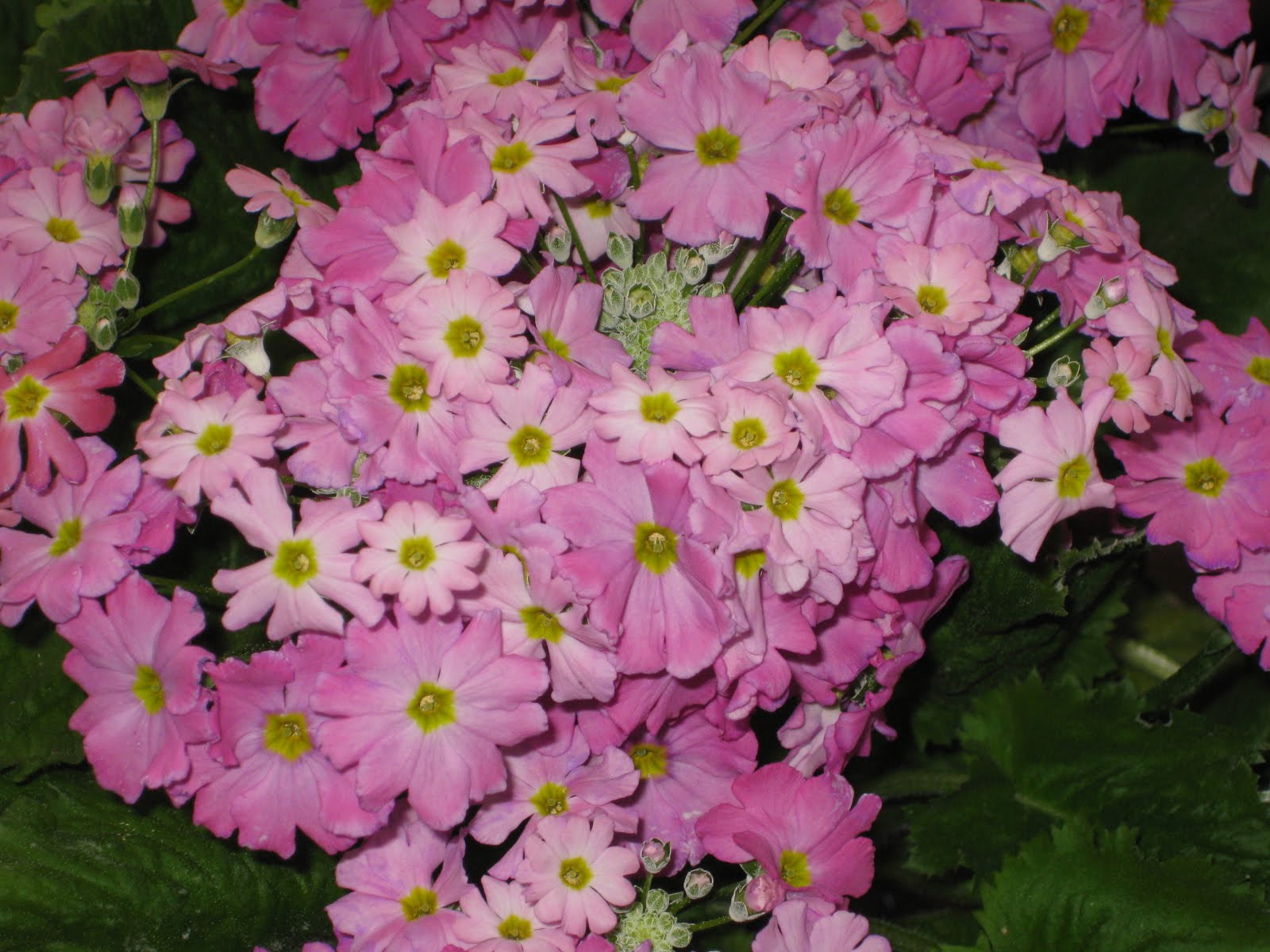
Primroses have it all — sparkling color, easy care, and the ability to thrive at any bright but sunless window. Gorgeous varieties of these classy spring harbingers can be found at your local, independent florist’s shop, but only from January through March. For this is their greenhouse-induced flowering period. You might enjoy, as I do each winter, a three month fling with a primrose or two. Here are my favorites types:
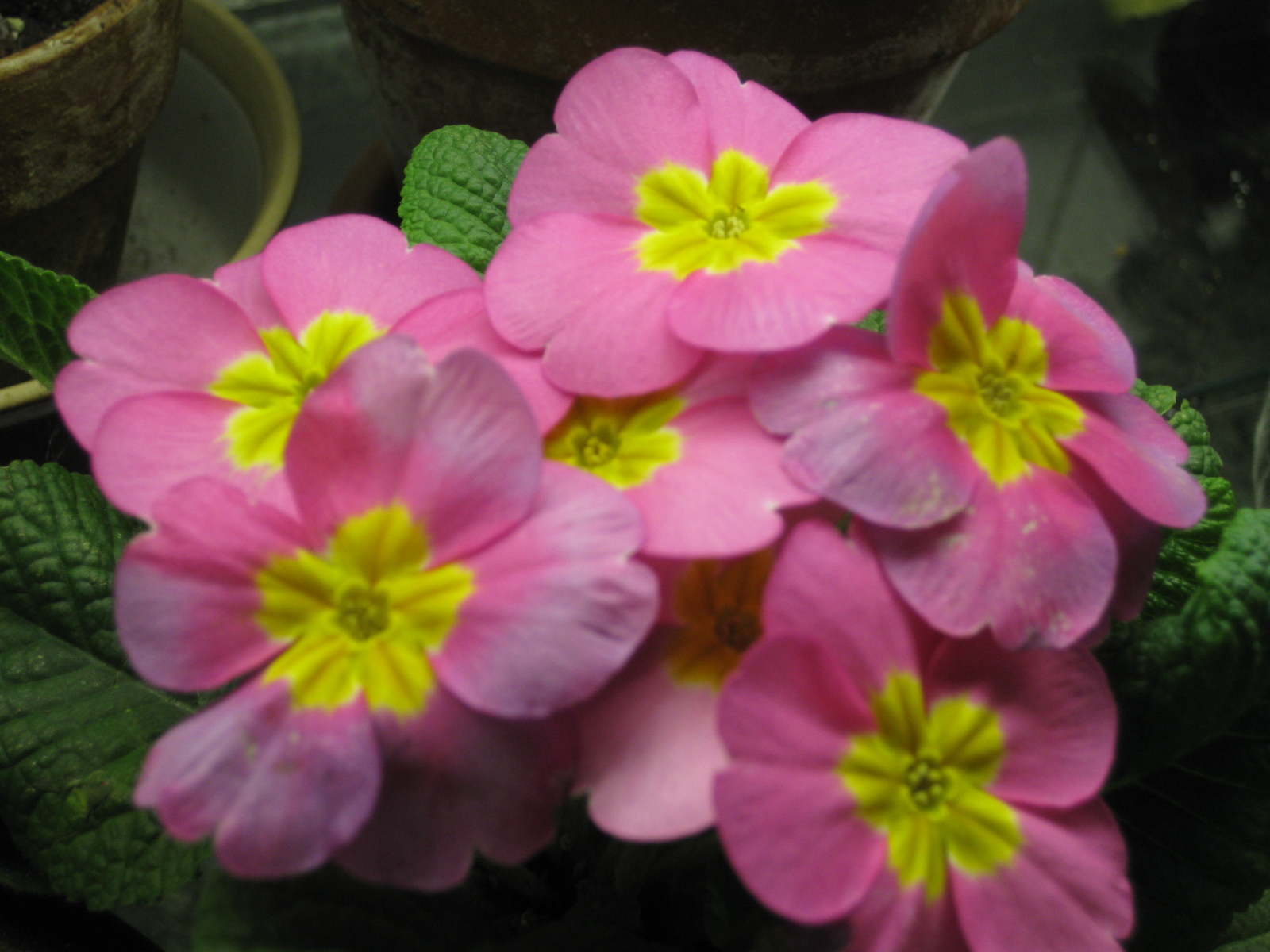
The English Primrose, P. acaulis, is familiar to most for its vividly-hued, tightly-clustered, 6-petaled flowers. These form a lavish bouquet above a rosette of foliage, rather like the African violet. Colors range from denim blue through ruby red, and every conceivable shade in between. Snip off faded blossoms to sustain a 3-month flowering period. And after that, you can plant it out in the garden. Acaulis is hardy in zones 4-7.
The Fairy Primrose, P. acaulis, tempts us with its sheer sweetness. Tall stems encircled not once but two or three times with tiny blooms, each one resembling a forget-me-not, surmount the plant with a white, lilac, or purple mist. Its delicate air resembles baby powder. It is hardy only in zones 8-10.
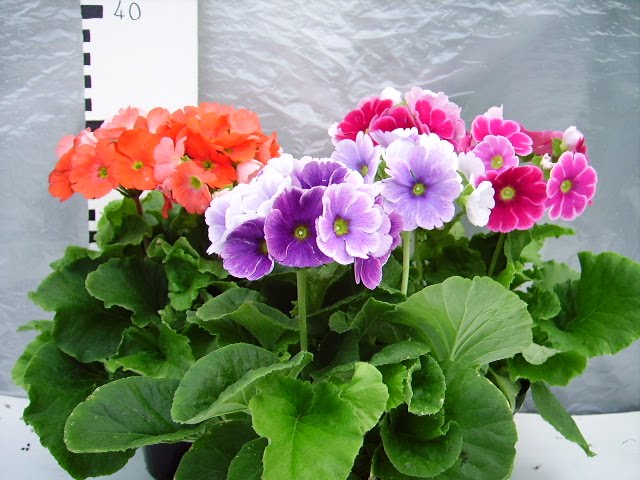
Then there is the German Primrose, P. obconica, as big and bold as Wagner’s Brunhilde. Atop every stem are eight or more flowers, each one measuring one-inch in diameter. Bloom colors are pink, purple, blue, orange or white. The leaves of older varieties contain primin, a substance that can cause a mild rash on certain individuals. But newer varieties, such as those in the Embrace and Libre series, are primin-free. Like malacoides, it is only worth planting outdoors in zones 8-10.
Despite their unique forms and flowers, these three primroses enjoy the same home life. Lots of light, plenty of water and a cool temperature are vital necessities. A hot, dry room will shorten a primrose career by weeks. An east or west window, where the sun filters in briefly and gently, is ideal.
A primrose’s powerful thirst should be quenched via bowl or deep saucer. For unless it is watered from the bottom, foliage must be lifted each time to keep moisture from the center of the plant. My plants rest in clear glass bowls, to which water is poured twice daily.
Compared to other houseplants, primroses are easy plants for the attentive gardener. In fact, the only hard part is deciding which cultivar to buy.
Don’t miss a beat at A Garden for the House…sign up for Kevin’s weekly newsletter!
Related Posts:
Forcing Forsythia & Other Spring-Flowering Branches
African Violets: My Easy, Always-In-Bloom Program
Seven Ways to Beautiful Houseplants


Erin says
Thanks for the knowledge- Im going to try to plant some of the english primroses out in the spring. My Malacoides just started to loose some of its florets but new ones are shooting up! Thanks for turning me on to a new and wonderful smelling plant!
Kevin Lee Jacobs says
Erin – you're welcome! And thank you for procuring them for me!
James says
Can you not keep malacoides and obconica outdoors in pots in summer, and then bring them indoors int the fall?
Kevin Lee Jacobs says
James – I don't bother holding over during summer the two primroses you mentioned, because they do not bloom well their second year. It's better to start each winter with fresh plants from the florist, or from those you've grown yourself, from seed.